By the Perth Concrete Driveways team
Published 10 September 2026 · Updated 11 September 2026
AI Overview
Concrete driveway sinking is almost never the concrete failing. It is the ground underneath giving way, usually because water has washed the sand out or because fill was never compacted. Any repair that skips the ground will sink again.
Key highlights
- A sinking driveway is a ground problem, not a concrete problem
- Water washing out the base is the most common cause in Perth
- Uncompacted fill keeps settling for years after the pour
- Sinking in a straight line usually means a services trench
- Sealing a crack on a moving slab changes nothing underneath
- Fix the ground first, then lift, patch or replace
Summarise with AI
Concrete driveway sinking happens when the ground under the slab moves or washes away, leaving the concrete with nothing solid to sit on. The concrete itself is rarely the problem.
That is worth knowing before you spend anything, because it decides the repair. If your driveway is sinking, the fix that lasts is the one that deals with the ground underneath it.
What Causes Concrete Driveway Sinking?
Every cause comes back to the same thing. The material under the slab is no longer where it was on the day the driveway was poured, because it has washed away, compressed or been disturbed.
Which one you are dealing with decides what the repair has to do, so it is worth identifying before anyone quotes on it.
| Cause | What It Looks Like | Common Where |
|---|---|---|
| Water washing out the base | Edges dropping, a void you can hear when driven over | Beside downpipes, garden beds and unrestrained edges |
| Fill that was never compacted | A whole section settling, worst in the softest patches | Sloping or filled blocks, in the first few years |
| A services trench under the slab | A straight line of sinking across the driveway | Across the front of a block, near the crossover |
| Tree roots breaking down | A slab that lifted for years and has started dropping | Where a tree has been removed |
| A slab too thin for the load | Cracking and dropping over a soft patch | Older or unreinforced driveways |
Water Washing Out the Base
This is the most common reason a driveway is sinking here. Water finds an edge or a joint, carries fine sand away with it, and the void underneath grows every time it rains until the slab drops into it.
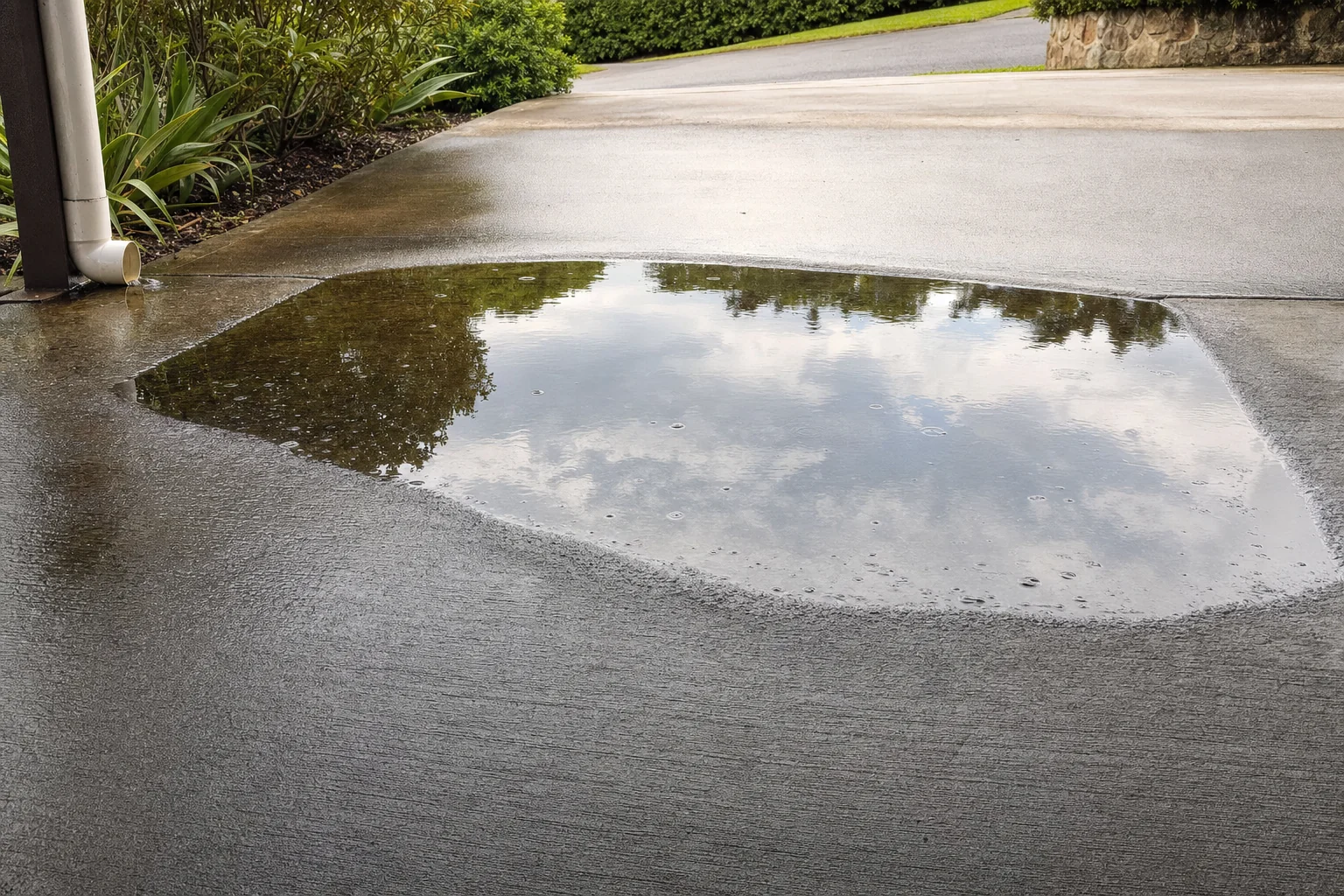
Worth checking: downpipes discharging beside the slab, garden beds shedding water onto the edge, and falls that send water back towards the house. Our guide on driveway drainage issues that damage concrete covers what to look for, and the state's own stormwater management manual for Western Australia sets out how site water is meant to be handled here.
Fill That Was Never Compacted
On a sloping or filled block the driveway may sit on brought-in material rather than natural ground. If that fill was not compacted in layers it keeps settling under its own weight, evenly at first and then unevenly as the softest patches give way fastest.
Sinking or Just Cracking?
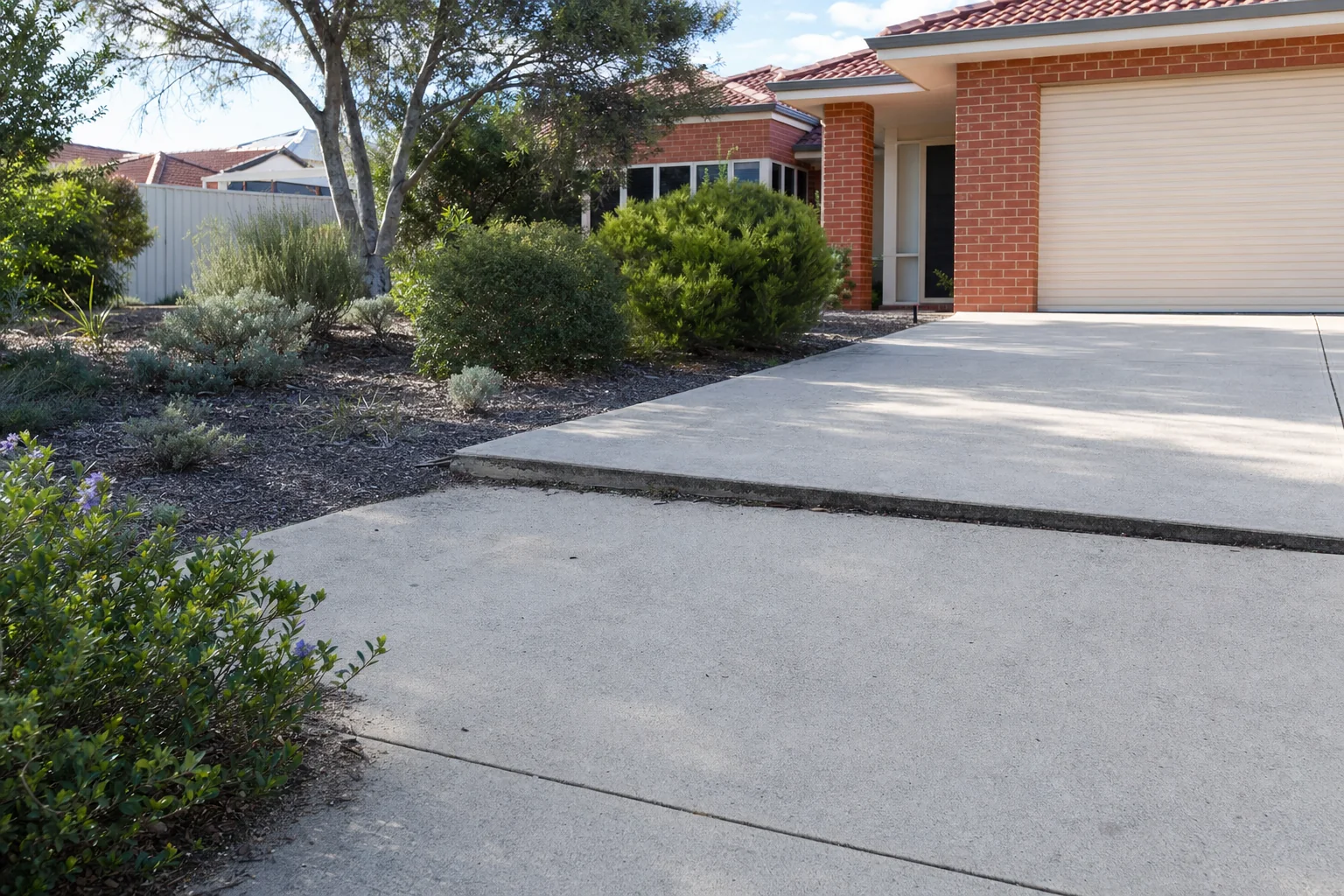
Cracking and sinking usually turn up together, which makes it hard to tell which came first. In most cases the ground moved and the concrete cracked because of it, so a driveway cracked and sinking in the same spot is one problem showing itself twice.
The difference you are looking for is level. Cracking on its own leaves the slab flat, and our guide on when driveway crack repair becomes necessary covers that side of it.
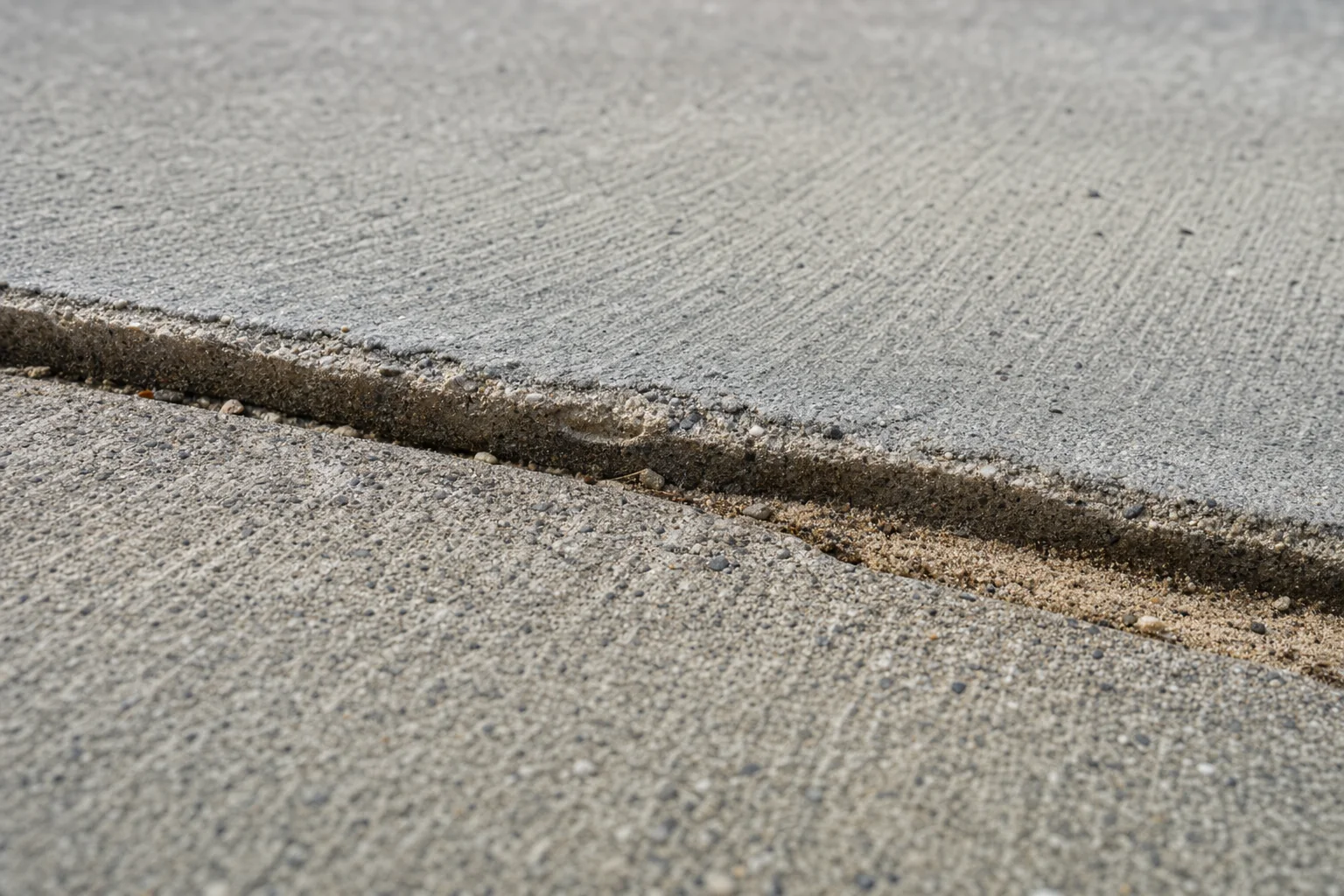
- One side of a crack sitting lower than the other
- A slab that rocks or knocks when you drive over it
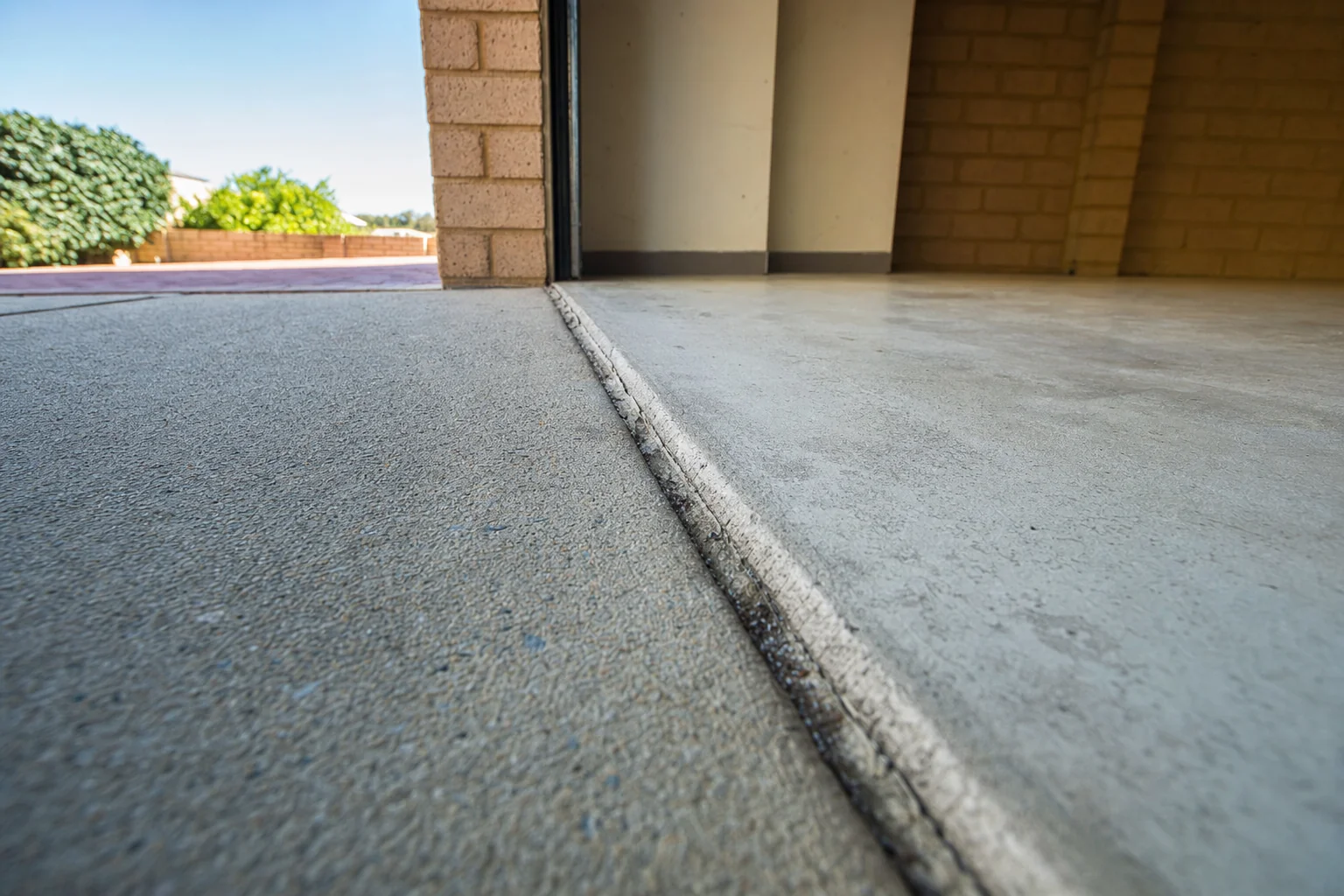
- A gap opening between the driveway and the garage
- Water pooling where it used to run off
- Cracks reopening in the same place after being sealed
A straight edge settles it in a minute
Lay a long straight edge or a string line across the area and look underneath. A slab that has sunk shows a gap you can measure. A slab that has only cracked sits flat against it.
Where Sinking Shows Up First
Concrete driveway sinking rarely starts in the middle of a slab. It starts at the edges and the openings, where water gets in and where the ground has least support.
- Along an unrestrained edge, especially beside a garden bed
- At the join with the garage slab or the house
- Across the crossover, where the verge meets the block
- Over a services trench running across the driveway
- On the low side of a sloping block
How a Sinking Driveway Gets Fixed
Sinking driveway repair falls into three routes, and all of them start by fixing whatever let the ground move. Skip that step and the slab drops again.
Which route suits depends on how far it has gone and whether the concrete itself is still sound.
| Repair Route | Suits | Keeps the Existing Surface |
|---|---|---|
| Lifting the slab | Sound concrete that has settled cleanly | Yes |
| Section replacement | One panel or strip failing, the rest sound | Partly |
| Full replacement | Cracking in several places, or failing fill | No |
| Drainage correction | Needed alongside all three, and done first | Yes |
Lifting is the least disruptive way to fix sinking concrete driveway sections, because the void underneath is filled and the slab raised back to level without touching the surface. It only works while the concrete is still in one piece.
Where a slab has broken up across several areas, or the fill underneath is failing generally, replacement is usually the better spend. Paying to repair sinking driveway sections every couple of years costs more than doing the job once.
Sealing the crack is not the repair
Filling a crack on a slab that is still moving hides the symptom and changes nothing underneath. The crack reopens, usually in the same place, and the slab keeps dropping.
What Happens If You Leave It
A sinking driveway does not settle down on its own, because the thing causing it does not stop. Every rain event moves a little more sand, and the low spot that forms holds water, which speeds the whole thing up.
That is why most people notice the change over winter rather than summer. Cracks widen, level differences become a trip hazard at the garage, and a slab that could have been lifted reaches the point where it has to be replaced. Water tracking towards the house is a problem well beyond the driveway.
How to Stop It Coming Back
Whether the slab is lifted, patched or replaced, the same few things decide whether concrete driveway sinking returns. None of them are about the concrete mix.
Water has to leave the slab rather than run along its edges. The base and any trench backfill have to be compacted in layers, and the edges need restraint so the base cannot migrate sideways. The slab itself needs a thickness suited to what drives on it, built to the standards Building and Energy administers in Western Australia. A leaking pipe or a blocked stormwater line gets dealt with before anything is poured over it.
Ground conditions vary across Perth, from deep sand on the coastal plain to clay through the foothills, which changes what the base needs. Our guide on soil testing before a concrete driveway explains why.
Frequently Asked Questions
Usually because water is getting in at the join, or because a services trench runs across that point. The join between two slabs is a natural path for water, and the ground beside a garage is often backfill rather than natural ground.
Often yes. Most sinking driveway repair work starts by filling the void underneath and lifting the slab back to level. That is the usual way to fix sinking concrete driveway sections without replacing them, and it only works while the concrete is still sound.
No. Fixing the ground first, then choosing whether to repair sinking driveway sections or replace them, deals with most of them. Replacement is for slabs that have failed in several places at once.
Mark the level against something fixed, such as a fence post or the garage slab, and check it again after a few weeks of rain. Movement that continues through a wet spell means the cause is still active.
Late sinking points to something that changed rather than something that was always wrong. A tree removed, a pipe that started leaking, a garden regraded, or drainage that stopped working will all do it.
That depends on your policy and the cause. Damage from a burst pipe is treated differently to gradual settlement, so check with your insurer before arranging work.
Getting a Sinking Driveway Sorted
The useful first step is working out where the water is going and what the slab is sitting on. That decides whether you are looking at a lift, a section replacement or a rebuild.
Perth Concrete Driveways inspects sinking driveways across Perth, identifies the cause, and quotes the concrete driveway sinking repair that suits it. Get in touch if you want yours looked at.
Covered in this guide
Perth Concrete Driveways
Perth's concrete driveway specialists. Free quotes across the metro area. Last updated 11 September 2026.