By the Perth Concrete Driveways team
Published 27 August 2026
AI Overview
Soil testing establishes what the ground beneath a new driveway will do once a slab is on top of it. Perth spans two very different soil types, deep coastal sand in the west and reactive clay through the foothills, and each one asks for a different slab. The report turns that into a site classification, which then sets thickness, reinforcement and base preparation.
Key highlights
- Soil testing measures how much the ground is likely to move, which is the biggest single influence on how a driveway is built.
- Perth spans deep sand and reactive clay, so two blocks a few kilometres apart rarely give the same answer.
- The report produces a site classification under AS 2870, from stable sand through to extremely reactive clay.
- Sand moves very little but must be compacted properly; clay swells when wet and shrinks when dry.
- Imported fill on a subdivided block is a common reason two neighbouring sites behave differently.
- A test before the pour costs a fraction of replacing a slab that has already cracked.
Summarise with AI
A concrete driveway is only ever as stable as the ground beneath it. Soil testing is how you find out what that ground will do once a slab is poured over it, before any of the decisions that depend on the answer are made.
The difference between a site that barely moves and one that lifts and drops with the seasons is not something you can judge from the surface. That is the gap soil testing exists to close.
What Soil Testing Actually Involves
Soil testing is a geotechnical investigation of the ground on your property, carried out by a qualified engineer rather than a concreter. Samples are taken from below the surface, analysed in a laboratory, and reported as a formal site classification.
The important word is below. The top layer of a block is usually topsoil, garden fill or whatever was graded flat when the house was built, and it says almost nothing about the material that will carry the load.
A soil test looks past that layer and describes the profile a driveway will genuinely rest on.
Why Perth Soil Differs Suburb by Suburb
Soil testing in Perth WA has to account for two landscapes sitting side by side. The Swan Coastal Plain carries most of the western and coastal suburbs on deep sand, while the ground firms into clay and lateritic gravel as you move east toward the Darling Scarp.
This is why soil analysis in Perth rarely returns the same result twice. Two homes a few kilometres apart can sit on materials that behave nothing alike.
| Ground type | Where it turns up | How it behaves | What it asks of a slab |
|---|---|---|---|
| Deep sand | Coastal and western suburbs across the Swan Coastal Plain | Stable through wet and dry seasons, but settles where it is loose | Thorough compaction and a well prepared base |
| Reactive clay | Foothills and eastern suburbs near the Darling Scarp | Swells when wet, shrinks when dry, repeatedly | Thickness, reinforcement, joint spacing and drainage away from the edges |
| Imported fill | Cut and filled blocks on newer subdivisions | Varies with how well it was compacted when placed | Testing before design, because the neighbour's result does not transfer |
What a Soil Test Analysis Reports
A soil test analysis does more than name the material. It classifies the site by how much ground movement is expected, using the classifications set out in AS 2870 Residential slabs and footings, published by Standards Australia.
| Site class | Meaning | Expected ground behaviour |
|---|---|---|
| A | Stable | Mostly sand or rock, with little or no movement. |
| S | Slightly reactive | Clay with a small amount of seasonal movement. |
| M | Moderately reactive | Clay or silt with moderate seasonal movement. |
| H1 and H2 | Highly reactive | Clay with a high degree of movement through wet and dry cycles. |
| E | Extremely reactive | Clay with very large seasonal movement. |
| P | Problem site | Soft soils, uncontrolled fill or other conditions needing specific engineering. |
A report usually records the depth of each layer, the moisture conditions on the day, and any fill the engineer encountered.
One point is worth being clear about, because it is easy to read the table above and draw the wrong conclusion. A site class does not tell you what to build.
AS 2870 covers slabs and footings for houses, not driveways specifically, and the classification is an input to a design rather than a specification in itself. The sequence runs in three steps: the report classifies the ground, an engineer or designer decides what that means for this particular driveway and its loads, and only then does a construction specification exist. Two blocks with the same class can still end up with different driveways once size, gradient, drainage and the vehicles using them are taken into account.
What Goes Wrong Without Soil Testing
Skipping the test does not remove the risk, it only delays finding out about it. The ground behaves however it was always going to, and the slab absorbs the difference.
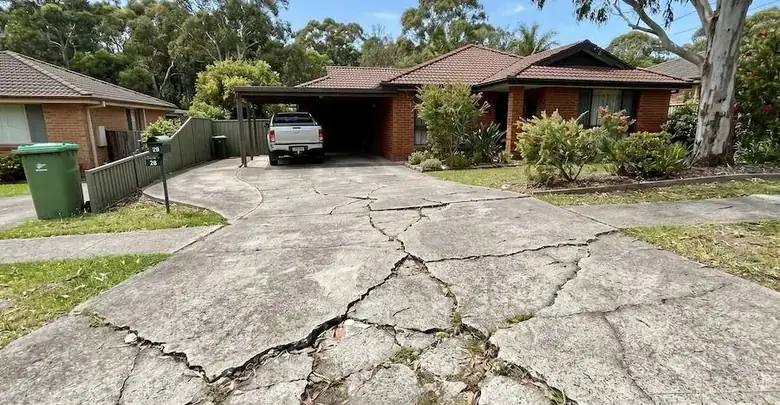
- Cracks running across the slab rather than along a control joint, where the ground has lifted or dropped unevenly.
- Sections that settle and hold water, which then works further into the base.
- Joints that open as the two sides move independently.
- Thickness and reinforcement chosen for a stable site, asked to do a job the ground never allowed.
None of these are quick repairs. Once a slab has moved with the ground, replacement is usually the only option, and a fresh report is the first thing needed before pouring again. It is also why reinforcement decisions are better made after the ground is understood than before.
If you are trying to work out whether cracking you can already see is normal or not, Building and Energy, the state regulator, publishes the Guide to Standards and Tolerances. It is written for residential building work rather than driveways specifically, but it is the WA reference for what counts as acceptable workmanship and what does not.
How Soil Testing Is Carried Out
The process is quicker and less disruptive than most people expect. Testing soil on a residential block is usually half a day on site, with laboratory work and reporting to follow.
- Boreholes or test pits go down at points across the site, deep enough to reach the material that will carry the load.
- Samples are taken from each layer and logged against the depth they came from.
- The laboratory measures moisture content and plasticity, which is what indicates how reactive a clay is.
- The engineer assigns a site classification and issues a report.
The site is left much as it was found. What you are paying for is the report, not the holes.
How the Results Change the Driveway
A report is only useful if it changes something. On stable sand the emphasis falls on compaction and base preparation, because the risk is settlement rather than movement.
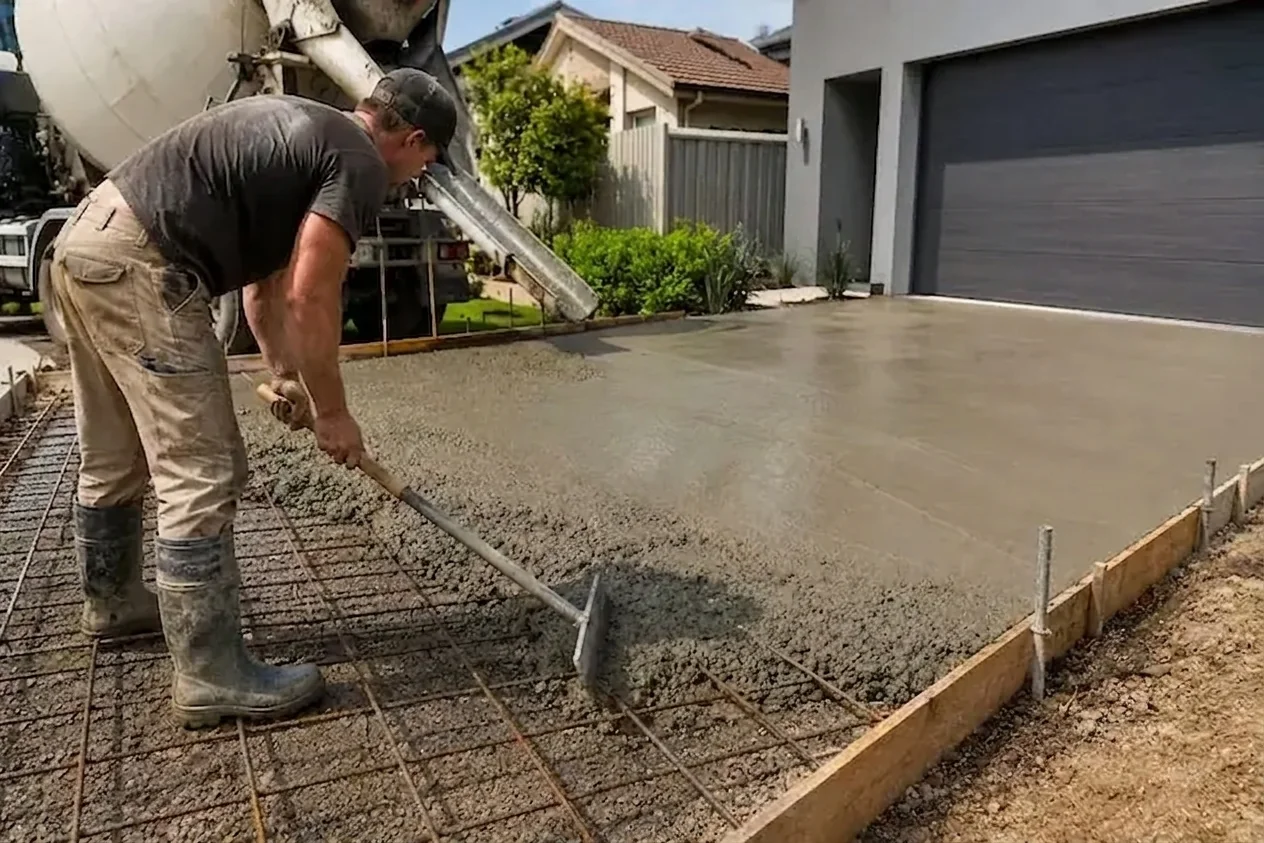
On reactive clay the same report raises different questions: how thick the slab should be, what reinforcement it carries, how joints are spaced, and where water is directed. None of those are decided by the classification alone, but a report showing a reactive site is what puts them on the table in the first place.
Drainage tends to matter most. A driveway channelling water toward its own edges creates the moisture swing that drives the movement, and that is one of the drainage problems that damage concrete over the years that follow.
When Soil Tests Are Worth Doing
Not every project needs a fresh test. Where a recent geotechnical report already exists for the property and nothing on the block has changed since, that report often still answers the question.
| Your situation | Is testing worth considering? |
|---|---|
| You already hold a recent soil report and nothing on the block has changed | Review the existing report first. It may already answer the question. |
| New subdivision, or ground that has been cut or filled | Strongly worth considering, because fill does not always match the ground beside it. |
| Foothills or a known reactive clay area | Strongly worth considering, since seasonal movement is the main risk. |
| Existing paths, paving or slabs nearby showing cracking or settlement | Worth investigating before adding another slab to the same ground. |
| Straightforward sandy block with no history of movement | Depends on what is already known about the site and how the driveway will be used. |
| Large driveway, or one carrying heavier vehicles | Worth discussing, because loads change what the ground has to cope with. |
Frequently Asked Questions
A geotechnical investigation that establishes what the ground beneath a proposed driveway is made of and how much it is likely to move. Samples are taken at depth, analysed in a laboratory, and reported as a site classification.
On-site work on a residential block is usually finished in well under a day. Laboratory analysis and the written report follow, so overall turnaround depends on the testing company rather than time spent on your property.
The process and the standard are national, but results differ because the ground does. Soil testing in Perth WA covers deep coastal sand in the west and reactive clay through the foothills, a wider range than many metropolitan areas.
Often yes. If the report is reasonably recent and the block has not been re-filled, re-graded or significantly altered, it may still describe the site accurately.
Geotechnical engineers and specialist testing companies carry it out. Concreters build to the report rather than producing it.
It can be worth it. Sand does not swell and shrink the way clay does, but testing soil on a sandy site identifies loose layers and imported fill, both of which cause settlement if they are not dealt with during base preparation.
The Short Version
Soil testing tells you what you are building on rather than what you are building. Thickness, reinforcement, base preparation and drainage are all responses to the answer it gives.
If you are planning a driveway in Perth and want the design built around your site classification rather than an assumption, Perth Concrete Driveways can quote against your report or point you toward having one done.
Covered in this guide
Perth Concrete Driveways
Perth's concrete driveway specialists. Free quotes across the metro area. Last updated 27 August 2026.