By the Perth Concrete Driveways team
Published 6 June 2026 · Updated 8 June 2026
AI Overview
Driveway thickness is one of the biggest factors in how long a concrete driveway lasts. A residential driveway should be a minimum of 100mm, and thicker where heavier vehicles park. Shaving the pour to save on concrete is a leading cause of early cracking.
Key highlights
- Most residential driveways in Australia use 100mm reinforced concrete slabs
- Heavier vehicles often require 125mm to 150mm of concrete thickness
- Driveway performance depends on preparation, reinforcement, drainage, and curing together
- Poor ground preparation is one of the biggest causes of cracking and sinking
- Reactive soil movement can affect slab stability over time
- Reinforcement mesh placement matters just as much as slab thickness
Summarise with AI
Driveway concrete thickness directly affects how well a driveway handles weight, resists cracking, and performs over time. In Australia, many residential driveways are built using a standard 100mm slab, but that does not suit every property or every type of vehicle.
The right driveway concrete thickness depends on vehicle loads, soil conditions, drainage, reinforcement, and how the driveway will be used long term. In Perth, reactive ground movement, hot summers, and poor drainage can place additional stress on concrete slabs over time.
Key Takeaways
- Most residential driveways in Australia use 100mm reinforced concrete slabs
- Heavier vehicles often require 125mm to 150mm of concrete thickness
- Driveway performance depends on preparation, reinforcement, drainage, and curing together
- Poor ground preparation is one of the biggest causes of cracking and sinking
- Reactive soil movement can affect slab stability over time
- Reinforcement mesh placement matters just as much as slab thickness
- Cheaper quotes sometimes reduce slab thickness or preparation to lower costs
- Proper driveway construction reduces long-term repair costs
What Is the Standard Concrete Driveway Thickness in Australia?
Most Australian residential concrete slabs are built at around 100mm thick for standard households. When properly reinforced and supported by a stable base, this thickness generally suits normal cars, SUVs, and light residential traffic.
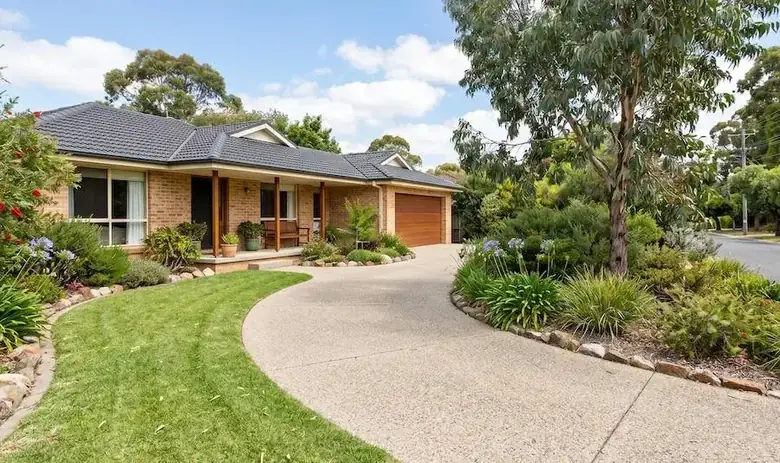
However, there is no single slab specification that works for every property. Driveways supporting caravans, heavy utes, boats, work trailers, or commercial vehicles often require thicker concrete and stronger reinforcement to handle the additional load safely over time.
One of the most common long-term driveway problems is using a standard residential slab in areas exposed to heavier traffic than the driveway was designed for. The surface may initially appear fine, but repeated heavy loads gradually increase stress within the slab and the ground underneath it.
| Driveway Use | Typical Concrete Thickness |
|---|---|
| Standard residential vehicles | 100mm reinforced slab |
| Heavy utes, caravans, boats | 125mm to 150mm reinforced slab |
| Commercial or high-load accessways | Engineered specification |
Pricing a concrete job rather than buying one?
Thickness is what drives the numbers on a quote, because it sets the concrete volume, the mesh and the formwork. Homeowners can leave that to their concreter, but if you are a builder or owner-builder working the figures out yourself, Perth Construction Estimating does concrete takeoffs and reo schedules for slabs, driveways and footings on Perth rates.
Concrete estimating in PerthThe right driveway concrete thickness should match how the property will actually be used, rather than relying on the same slab design for every driveway.
Why Concrete Thickness Matters Structurally
A driveway functions as a structural slab, not just a finished surface. Every vehicle load transfers pressure through the concrete and into the ground underneath. The slab needs enough strength and rigidity to spread that load evenly.
When concrete is too thin for the conditions, the slab flexes more under pressure. Over time, repeated movement can create weak points that develop into cracking, edge deterioration, or surface settlement.
Correct driveway concrete thickness helps:
- Improve load distribution
- Reduce slab flexing
- Limit structural stress
- Improve long-term durability
- Reduce movement on reactive ground
In Perth conditions, slab stability can also be affected by moisture changes underneath the driveway. If water weakens the supporting ground, thinner slabs become more vulnerable to movement and cracking.
Why Reinforcement Matters Just as Much as Thickness
Concrete is strong under compression but weaker when exposed to tension and movement forces. Reinforcement helps the slab handle those stresses more evenly and improves structural stability over time.
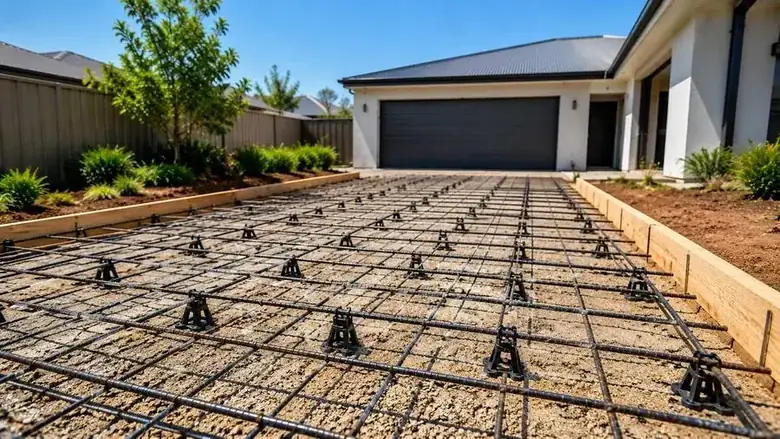
Most residential driveways use steel reinforcement mesh such as SL72 or SL82, depending on the slab design and expected loads. Heavier-duty driveways may require larger mesh sizes or additional reinforcing bars in high-stress areas.
Proper reinforcement helps:
- Reduce crack expansion
- Improve load distribution
- Support slab stability
- Improve long-term durability
However, reinforcement only works properly when it is correctly positioned within the slab. One of the most common residential concreting problems is reinforcement sitting too low during the pour, leaving parts of the slab with reduced structural support.
A thicker slab without proper reinforcement can still crack prematurely. Likewise, reinforcement alone cannot compensate for inadequate concrete thickness for the driveway or unstable ground underneath the slab.
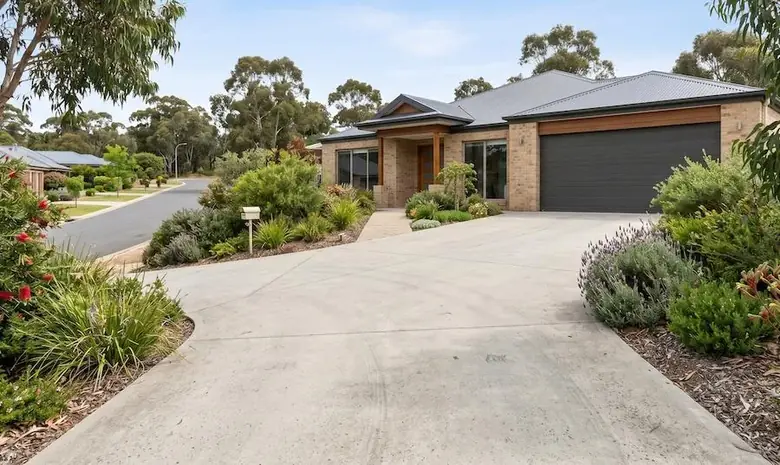
What Happens Underneath the Slab Matters
One of the biggest causes of driveway failure is poor preparation underneath the concrete. Even correctly sized slabs can fail early if the supporting ground settles, softens, or moves over time.
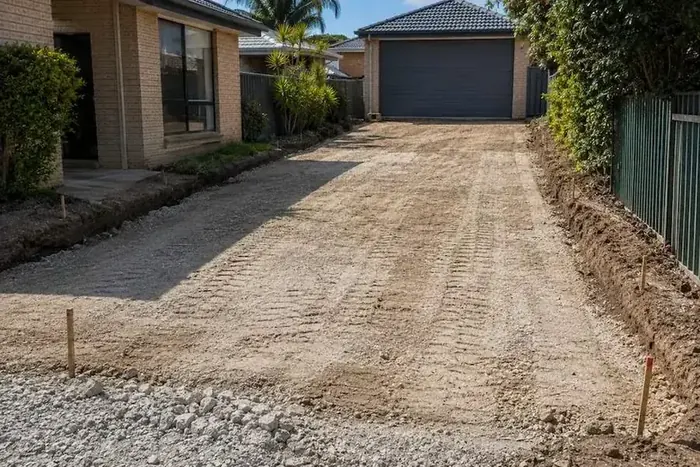
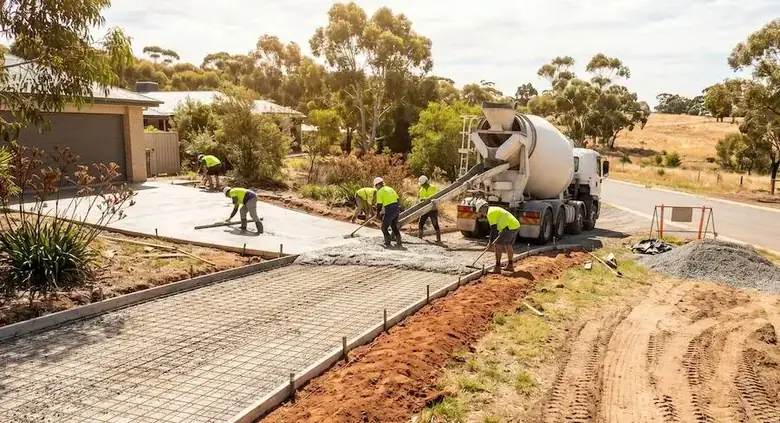
Proper driveway preparation usually includes excavation, removal of soft material, compacted sub-base installation, levelling, and drainage planning. Depending on site conditions, crushed rock or road base may be compacted underneath the slab to improve stability.
In Perth, preparation requirements can vary significantly between properties because of limestone-heavy ground, sandy soil areas, and reactive clay conditions. What works well on one site may not suit another.
Weak preparation underneath the slab commonly leads to:
- Surface sinking
- Uneven slabs
- Structural cracking
- Edge movement
- Water pooling
Even thick concrete can eventually fail if the ground underneath is unstable.
Why Drainage Plays a Major Role in Driveway Performance
Water is one of the main causes of long-term driveway damage. Poor drainage allows moisture to weaken the soil underneath the slab, reducing the ground’s ability to support vehicle loads consistently.
Common drainage problems include:
- Water pooling on the surface
- Incorrect falls
- Stormwater runoff flowing underneath the slab
- Soft ground forming beside driveway edges
- Inadequate site drainage
In Perth, seasonal moisture changes and reactive ground movement can increase these problems further. A driveway needs to move water away efficiently rather than trapping moisture underneath the slab.
Good driveway drainage works together with proper slab thickness, reinforcement, and preparation. Even heavily reinforced concrete can struggle long-term if water consistently weakens the supporting ground underneath.
Control Joints and Curing Also Affect Cracking
Concrete naturally shrinks as it cures. Control joints help manage this movement by encouraging cracking to occur in controlled locations rather than randomly across the slab surface.
Without properly planned control joints, concrete can develop uncontrolled cracking as internal stresses build during curing and long-term temperature changes.
Curing also plays a major role in final concrete strength. Fresh concrete needs time to properly harden and gain strength before handling regular vehicle traffic.
Allowing vehicles onto a driveway too early can increase the risk of:
- Surface damage
- Premature wear
- Weakening near slab edges
- Reduced long-term durability
Proper curing is one of the simplest ways to improve long-term driveway performance, yet it is often rushed on cheaper installations.
Common Driveway Thickness Mistakes
Many long-term driveway problems begin because important structural details were overlooked during installation. One of the most common mistakes is comparing quotes based only on the upfront price without checking the actual slab specifications.
Cheaper installations sometimes reduce:
- Driveway concrete thickness
- Reinforcement quality
- Base preparation depth
- Drainage work
- Concrete strength
These shortcuts are usually hidden underneath the finished slab, where homeowners cannot easily see them once construction is complete.
Another common issue is using standard residential slab thickness for driveways exposed to heavier vehicles long-term. While a 100mm slab may suit normal household traffic, it may not perform well under constant caravan, trailer, or work vehicle loads.
Some driveways also fail because reinforcement was poorly positioned or because the slab was poured onto unstable ground that was not compacted correctly beforehand.
Why Proper Driveway Construction Saves Money Long Term
A properly built driveway generally costs less over time because it reduces the likelihood of major repairs, slab replacement, and ongoing maintenance problems later.
Long-term durability comes from several parts of the construction working together:
- Correct driveway concrete thickness
- Suitable reinforcement
- Stable preparation underneath the slab
- Proper drainage design
- Correct curing practices
- Realistic slab specifications for the property
Cutting costs during installation may reduce the upfront quote, but it often increases the risk of expensive structural problems later. In many cases, repairing a failed driveway costs far more than building it properly the first time.
Frequently Asked Questions
Most Australian residential driveways are commonly built at around 100mm thick for standard household vehicle use. Heavier vehicles may require thicker slabs depending on the site conditions and expected loads.
A properly reinforced 100mm slab can perform well for standard cars and SUVs when supported by stable preparation and good drainage. Heavier vehicles often require increased slab thickness.
Concrete slabs that are too thin are more vulnerable to cracking, sinking, surface movement, and structural stress under repeated vehicle loads.
No concrete slab is completely crack-proof. However, correct driveway concrete thickness combined with proper reinforcement, preparation, and drainage helps significantly reduce the risk of major cracking and movement.
Yes. Reinforcement helps concrete handle stress more evenly and improves structural stability. Thickness and reinforcement both play important roles in long-term driveway durability.
Building a Driveway That Holds Up
Driveway concrete thickness plays a major role in how well a driveway handles vehicle loads, resists cracking, and performs over time. While many Australian residential driveways use standard 100mm slabs, the right specification depends on the site conditions and how the driveway will actually be used.
Long-term performance relies on more than slab depth alone. Proper reinforcement, stable preparation underneath the slab, effective drainage, and correct curing all contribute to how well a driveway performs over the years.
For Perth homeowners, choosing the right driveway specification from the beginning can help avoid many of the problems that commonly appear in poorly constructed driveways later on. Let’s discuss your concrete driveway today.
Covered in this guide
Perth Concrete Driveways
Perth's concrete driveway specialists. Free quotes across the metro area. Last updated 8 June 2026.