By the Perth Concrete Driveways team
Published 29 May 2026 · Updated 8 June 2026
AI Overview
Simple, regular maintenance keeps a concrete driveway looking good and lasting decades. Cleaning, sealing, sorting drainage and catching small cracks early all prevent bigger, costlier problems. In Perth conditions, a small amount of upkeep goes a long way.
Key highlights
- Clean the driveway regularly to stop staining
- Reseal every few years for protection
- Fix small cracks early before they spread
- Keep water draining away from the slab
- Watch for pooling and drainage problems
- Good upkeep helps a driveway last decades
Summarise with AI
Driveway maintenance mainly comes down to keeping moisture, stains, surface wear, and small cracks under control before they turn into larger problems. Regular driveway maintenance helps concrete last longer, stay safer underfoot, and avoid expensive repairs later.
In Perth, concrete driveways deal with strong UV exposure, shifting soil, heavy rain periods, and daily vehicle traffic throughout the year. This guide explains the most important parts of concrete driveway care and maintenance, what causes common problems, and what homeowners can do to keep their driveway in good condition long term.
Points to Remember
- Regular driveway maintenance helps reduce cracking and surface wear
- Cleaning oil stains early prevents deeper staining
- Sealing protects concrete from moisture and UV exposure
- Drainage problems can lead to slab movement and cracking
- Small cracks should be repaired before they spread
- Moss and algae can create slippery surfaces
- Heavy vehicles may damage underbuilt residential driveways
- Regular inspections help identify issues early
Why Concrete Driveway Maintenance Matters
Concrete is durable, but it still needs ongoing care to handle weather exposure, vehicle traffic, and ground movement over time. Most driveway problems develop gradually, which means small issues can often be repaired early before they become major structural problems.
Many homeowners only focus on driveway maintenance once visible cracking or deterioration appears. In reality, consistent maintenance for concrete driveway surfaces usually costs far less than large repairs or full replacement later.
Small Problems Usually Become Bigger Repairs
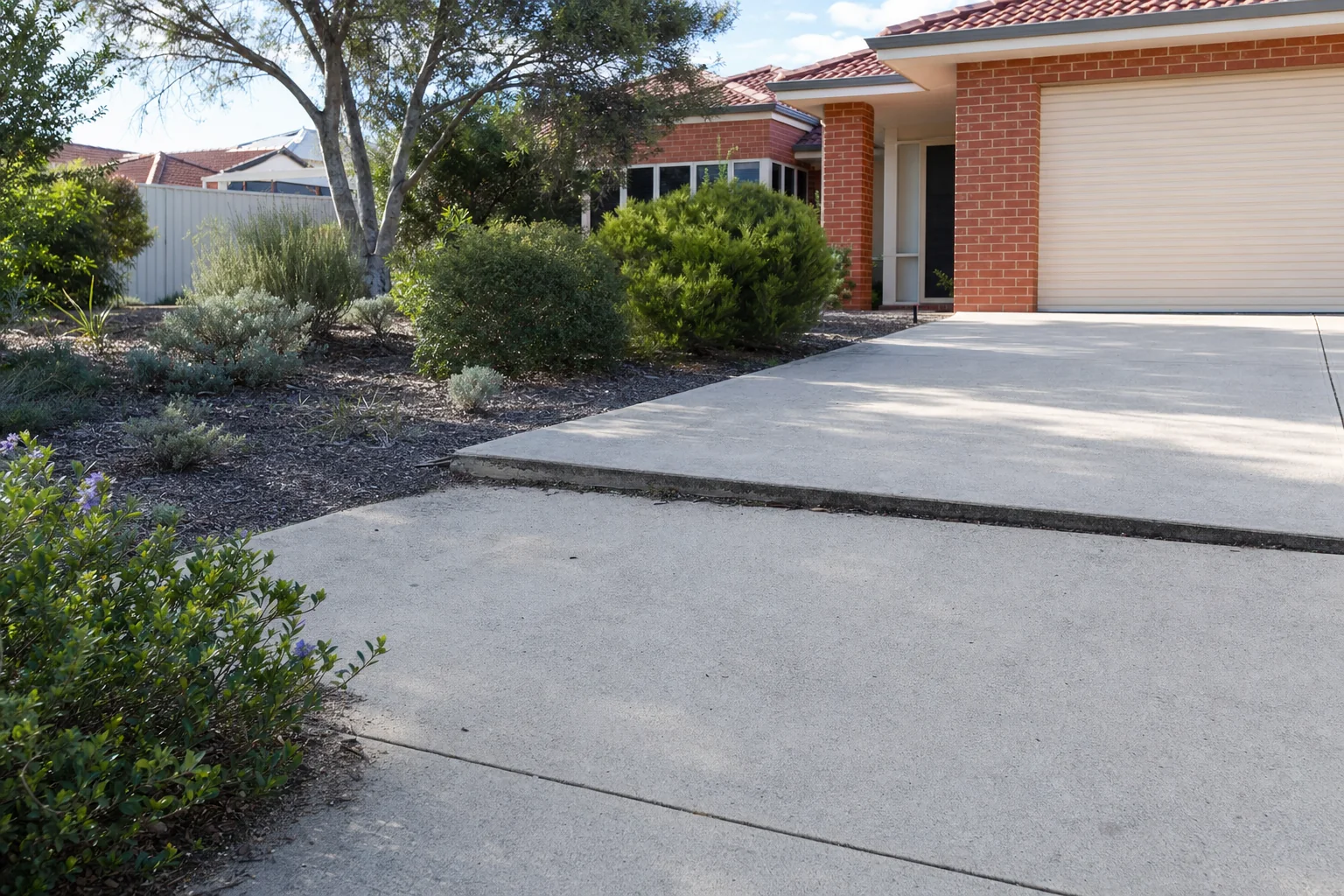
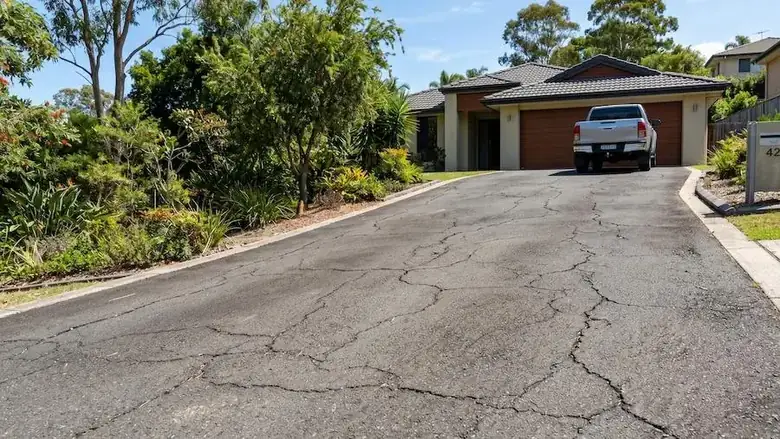
Hairline cracks often allow water underneath the slab. Once moisture affects the ground below, movement can begin developing underneath the concrete, leading to larger cracks, sinking sections, or uneven surfaces.
Oil stains also become harder to remove the longer they sit. Worn sealers leave decorative concrete exposed to UV damage and moisture penetration, while algae buildup can create slippery areas around the home.
Perth Conditions Put Extra Stress on Concrete
Perth conditions can be hard on concrete driveways. Strong UV exposure gradually breaks down sealers and decorative finishes, while hot summers create constant expansion and contraction within the slab.
Heavy winter rain can expose drainage issues quickly, especially on properties with reactive soil conditions. Daily traffic from vehicles, caravans, trailers, and work utes also places ongoing pressure on residential driveways.
| Common Perth Conditions | Effect on Concrete Driveways |
|---|---|
| Strong UV exposure | Fading and sealer breakdown |
| Heavy rain | Drainage problems and slab movement |
| Shifting soil | Cracking and uneven sections |
| Heavy vehicles | Surface wear and structural stress |
| Moisture buildup | Moss, algae, and slippery surfaces |
Regular Cleaning & General Upkeep
Regular cleaning is one of the simplest but most important parts of driveway maintenance. Dirt, sand, leaves, tyre residue, and organic material gradually wear down the surface if they are left sitting for long periods.
Most concrete driveway maintenance is straightforward when handled consistently. Light cleaning combined with occasional deeper washing is usually enough to keep residential driveways in good condition.
Why Regular Cleaning Matters
Sweeping removes loose debris before it grinds into the surface under vehicle traffic. This is particularly important for decorative finishes like exposed aggregate and coloured concrete.
Cleaning also helps prevent staining from becoming permanent and makes it easier to spot early signs of cracking, drainage problems, or surface wear.
How Often Should You Clean a Concrete Driveway?
Most Perth homeowners benefit from sweeping their driveway every couple of weeks, especially during autumn when leaves and debris build up faster.
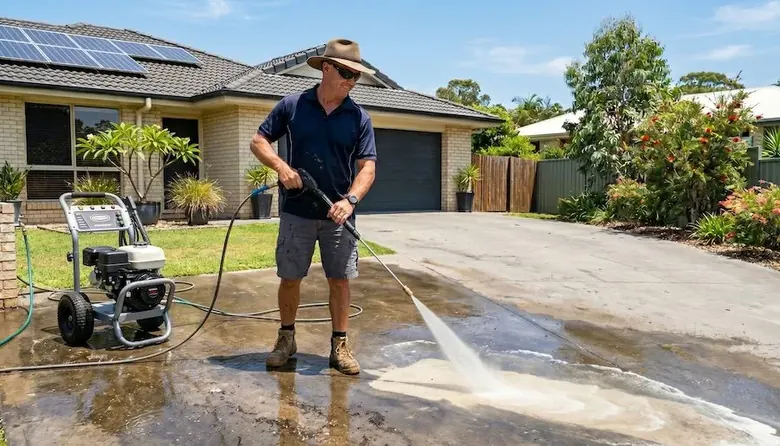
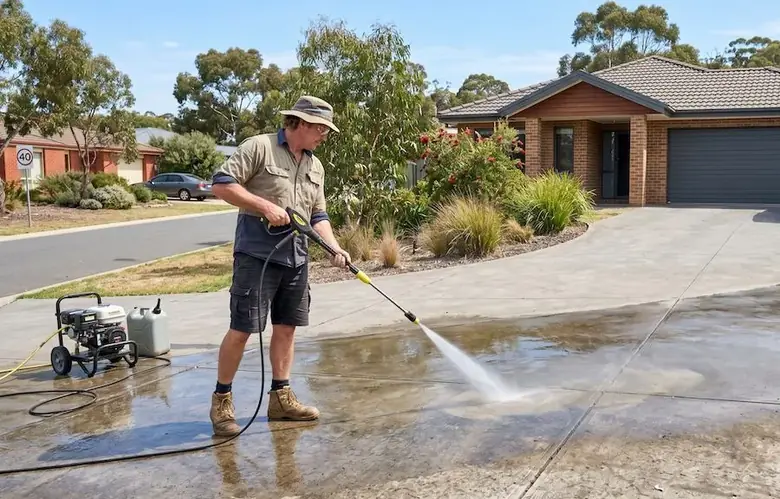
Washing the surface occasionally using mild detergent and water helps remove dirt and grime. Pressure washing can also be effective for stubborn buildup, although excessive pressure may damage the surface if used incorrectly.
| Maintenance Task | Recommended Frequency |
|---|---|
| Sweeping debris | Every 1 to 2 weeks |
| Light washing | Every few months |
| Deep cleaning | Every 6 to 12 months |
| Resealing | Every 2 to 3 years |
| Crack inspections | Regularly throughout the year |
Common Cleaning Mistakes to Avoid
One common mistake with driveway maintenance is using harsh chemicals without properly diluting them first. Strong cleaners can damage sealers and decorative finishes over time.
Ignoring moss, algae, and oil stains is another issue. Once these contaminants soak deeper into the concrete or repeatedly trap moisture against the surface, deterioration often accelerates.
How to Remove Oil Stains, Moss & Surface Marks
Even with regular cleaning, most driveways eventually develop some level of staining or organic buildup. Vehicles leak oil, tyres leave marks, and shaded areas often collect moss or algae.
The key is dealing with these problems early, before they become harder to remove or begin affecting the condition of the concrete.
Removing Oil & Grease Stains
Oil stains are one of the most common driveway maintenance issues across Perth. Because concrete is porous, oil can slowly soak below the surface if left untreated.
Fresh stains should be cleaned as early as possible using absorbent material, followed by a concrete-safe degreaser. Mild detergent and a stiff-bristle broom may also help with lighter stains.
Aggressive acid washing is usually not recommended because it can damage sealers and decorative finishes.
Cleaning Moss & Algae Safely
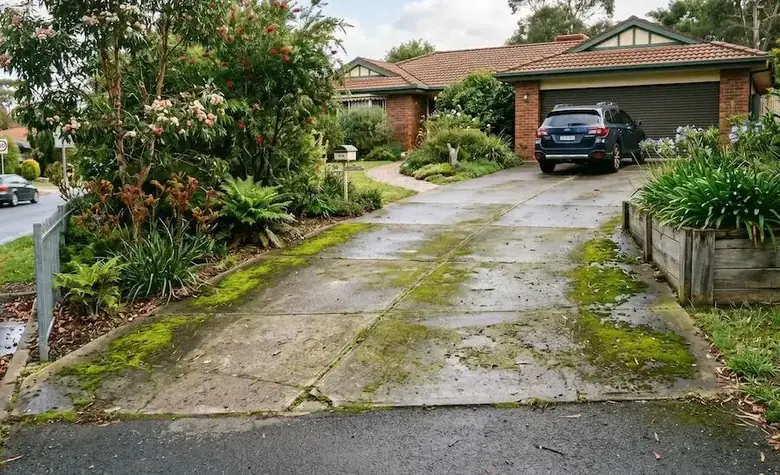
Moss and algae are common in damp or shaded sections of driveways, especially where drainage is poor. Besides affecting appearance, they also create slip hazards after rain.
Diluted concrete-safe cleaners or mild bleach solutions are commonly used to remove algae buildup before pressure cleaning the surface. If algae repeatedly returns, there is often an underlying moisture or drainage issue contributing to the problem.
Natural Cleaning Alternatives
Some homeowners prefer more natural cleaning methods as part of their concrete driveway care and maintenance routine. Vinegar, baking soda, and washing soda are sometimes used for lighter surface cleaning and mild organic buildup.
These options are generally less effective for deep oil stains or heavier grime, but they may help for basic maintenance.
Why Sealing Your Driveway Is Important
Sealing is one of the most important parts of long-term driveway maintenance because it helps protect the surface from moisture, staining, UV exposure, and general wear.
A properly sealed driveway is usually easier to clean and less likely to absorb contaminants into the concrete surface.
What Concrete Sealer Actually Does
Sealers create a protective barrier that helps reduce moisture penetration and staining. They also help preserve decorative finishes and make cleaning easier over time.
For exposed aggregate and coloured concrete, sealing helps maintain appearance and slows fading caused by Perth’s strong UV exposure.
How Often Should Concrete Be Resealed?
Most residential driveways benefit from resealing every two to three years, although this can vary depending on traffic levels, weather exposure, and surface finish.
Driveways exposed to full sun or heavier vehicle traffic may require more frequent resealing than standard residential surfaces.
Common Types of Concrete Sealers
Penetrating sealers absorb into the concrete and help reduce moisture penetration while maintaining a more natural appearance.
Acrylic sealers are commonly used on decorative concrete because they enhance colour while providing surface protection.
Epoxy coatings provide a thicker protective layer but are more commonly used in garages and specialised applications rather than outdoor residential driveways.
Signs Your Driveway Needs Resealing
Some common signs include:
- Fading decorative finishes
- Increased staining
- Water is soaking into the surface
- Dry or patchy appearance
- Loss of surface protection
If water absorbs quickly into the slab instead of sitting briefly on the surface, the existing sealer may already be wearing down.
Preventing Cracks & Structural Damage
Cracking is one of the most common concerns homeowners have with concrete driveways. Minor cracking can still occur naturally over time, but proper driveway maintenance helps reduce the risk of larger structural issues developing later.
The main goal is to identify whether cracks are minor surface issues or signs of movement underneath the slab.
What Causes Concrete Driveways to Crack?
There are several common causes of driveway cracking across Perth:
- Poor drainage
- Ground movement
- Heavy vehicle loads
- Tree roots
- Inadequate base preparation
- Ongoing moisture underneath the slab
Hot weather and temperature changes also contribute to expansion and contraction within the concrete itself.
Why Early Crack Repairs Matter
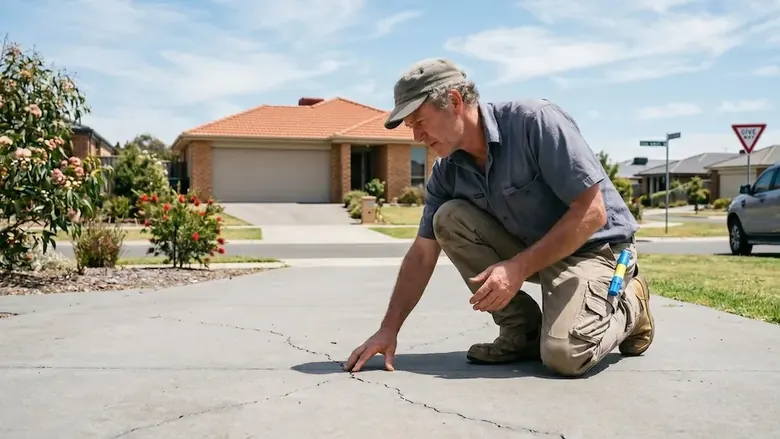
Even small cracks can allow moisture underneath the slab. Once water affects the base below the concrete, movement often becomes worse over time.
Early repairs are usually simpler and more affordable than large structural repairs later. Small cracks that are repaired early are less likely to develop into sinking sections or major slab movement.
Basic Crack Repair Process
Minor crack repairs usually involve:
- Cleaning debris from the crack
- Allowing the area to dry
- Applying a suitable filler or sealant
- Smoothing the repair evenly
- Allowing proper curing time
Using the correct repair product matters because some fillers are designed to remain flexible while others are intended for more rigid repairs.
When You Need Professional Repairs
Professional assessment is usually worthwhile if you notice widening cracks, uneven slab heights, recurring movement, or sinking sections.
These issues often indicate underlying structural or drainage problems rather than simple surface deterioration.
Drainage & Water Management
Good drainage is one of the most important parts of concrete driveway maintenance because water is one of the biggest causes of premature deterioration.
Concrete itself handles moisture reasonably well when properly installed and sealed. The bigger issue is usually what happens underneath the slab when water repeatedly pools around the driveway.
Why Drainage Is Critical for Concrete Longevity
If water penetrates underneath the slab, the ground below may begin softening, shifting, or eroding. Once the base loses stability, cracking and movement often follow.
Poor drainage commonly contributes to:
- Cracking
- Uneven surfaces
- Edge sinking
- Surface deterioration
- Soil erosion
Signs Your Driveway Has Drainage Problems
Some drainage problems are obvious, while others develop slowly over time. Warning signs often include pooling water, recurring algae buildup, cracking near low points, and soil erosion around slab edges.
Water stains or damp sections that remain long after rain can also indicate poor runoff.
Ways to Improve Driveway Drainage
Keeping nearby drains and grates clear helps reduce water buildup around the slab. Redirecting downpipes away from the driveway and correcting low spots where water pools can also improve drainage performance.
More severe drainage problems may require additional drainage systems or reconstruction work.
Avoiding Premature Wear & Damage
Even a properly installed driveway will wear faster if it is exposed to constant overloading, neglected surface care, or poor drainage conditions.
Concrete driveway maintenance is not only about preventing cracks. It also helps slow down gradual surface wear and deterioration over time.
Vehicle-Related Wear
Many residential driveways are designed for standard passenger vehicles only. Heavy caravans, boats, trailers, work trucks, and machinery can place additional stress on slabs that were not built for heavier loads.
Stationary wheel turning can also wear decorative finishes faster, particularly on exposed aggregate and coloured concrete surfaces.
Environmental Damage
Strong UV exposure gradually wears down sealers and decorative coatings. Coastal moisture, trapped organic material, and tree roots can also contribute to long-term deterioration.
Leaves, moss, dirt, and moisture left sitting on the driveway for long periods can slowly affect both appearance and surface durability.
The Importance of Regular Inspections
Checking the driveway regularly helps identify small problems before they become larger repairs.
This includes looking for:
- New cracks
- Pooling water
- Worn sealers
- Surface movement
- Sinking edges
- Drainage problems
When Concrete Driveway Resurfacing Makes Sense
Not every ageing driveway needs complete replacement. In some cases, resurfacing can restore the appearance and usability of the driveway when the underlying slab remains structurally sound.
A proper inspection is important before resurfacing because surface coatings alone will not fix deeper structural movement underneath the concrete.
Signs a Driveway Can Be Resurfaced
Resurfacing may be suitable when the driveway has:
- Cosmetic wear
- Minor cracking
- Surface fading
- Light pitting
- Decorative finish deterioration
When the base slab remains stable, resurfacing can improve the appearance while extending the usable life of the driveway.
When Full Replacement Is the Better Option
Full replacement is often more appropriate when there is major cracking, widespread sinking, drainage failure, or severe slab movement.
Applying new surface coatings over unstable concrete usually only hides the underlying issue temporarily.
Benefits of Resurfacing
Resurfacing can improve appearance, refresh decorative finishes, and extend driveway lifespan without the cost of complete reconstruction in some situations.
Ongoing driveway maintenance is still important after resurfacing to help protect the new surface over time.
Slip Resistance & Driveway Safety
A driveway should remain safe to walk and drive on throughout the year, particularly during winter and wet conditions.
Good maintenance for concrete driveway surfaces helps preserve traction while reducing slip hazards caused by moisture and surface contamination.
Common Slip Hazards
Several common issues can make concrete surfaces slippery:
- Moss
- Algae
- Oil residue
- Standing water
- Smooth worn finishes
These problems are especially common in shaded areas where moisture takes longer to dry.
Driveway Finishes With Better Grip
Exposed aggregate remains one of the most popular driveway finishes across Perth because it provides strong traction while handling everyday wear well.
Broom-finished concrete is another practical option that offers better grip than very smooth concrete surfaces.
Maintaining Long-Term Slip Resistance
Regular cleaning helps remove contaminants before they become slippery hazards. Proper sealing also helps reduce moisture penetration and organic buildup.
Anti-slip additives may sometimes be added to decorative concrete sealers where additional traction is needed.
Frequently Asked Questions
Basic driveway maintenance should be done regularly throughout the year. Sweeping, cleaning stains early, checking for cracks, and monitoring drainage all help prevent larger problems from developing.
Most sealers last around two to three years depending on traffic levels, weather exposure, and the type of finish used on the driveway.
Yes. Small cracks can often be repaired using suitable fillers or sealants before they become larger structural issues.
Sinking usually happens when water weakens or erodes the ground underneath the slab. Poor drainage and inadequate base preparation are common causes.
Yes, although excessive pressure can damage the surface if used incorrectly. Moderate pressure and proper technique are recommended, especially on exposed aggregate finishes.
Maintaining Driveways the Right Way
Concrete driveway maintenance helps protect the surface from moisture, staining, cracking, and premature wear. Regular cleaning, sealing, drainage management, and early repairs all help concrete last longer and reduce the likelihood of larger structural problems later.
In Perth conditions, constant stress is placed on concrete surfaces. Keeping up with regular driveway maintenance is one of the simplest ways to protect long-term durability and appearance.
If you need help with concrete driveway maintenance, repairs, resurfacing, drainage issues, or a new driveway installation, Perth Concrete Driveways can provide practical advice and reliable concrete driveway services built for Perth conditions. Contact us today.
Covered in this guide
Perth Concrete Driveways
Perth's concrete driveway specialists. Free quotes across the metro area. Last updated 8 June 2026.