By the Perth Concrete Driveways team
Published 14 July 2026
AI Overview
The best time of year to pour concrete in Perth is generally autumn or spring, when temperatures are milder and conditions more predictable. What matters more than the calendar is the weather on the day: heat, wind and rain all change how the slab cures. Experienced concreters work around Perth's conditions year round by adjusting pour times and curing methods.
Key highlights
- Autumn and spring usually give the most favourable conditions for pouring concrete in Perth.
- Concrete cures through a chemical reaction, it does not simply dry out.
- Hot days, dry easterly winds and heavy rain each affect the finish in different ways.
- Summer and winter pours are still common, they just need more planning.
- Proper curing matters more to long-term strength than the season you pour in.
Summarise with AI
The best time of year to pour concrete in Perth is generally during autumn or spring, when temperatures are milder and weather conditions are more predictable. However, concrete can be poured successfully throughout the year when experienced concreters plan around the forecast and use the right construction and curing methods.
Perth’s climate presents different challenges in every season, from hot summer afternoons and dry easterly winds to winter rain. Understanding how these conditions affect concrete will help you choose the right time to begin your project and give your new driveway the best chance of lasting for decades.
Before You Start Pouring
- Autumn and spring generally provide the most favourable conditions for concrete work in Perth.
- Concrete can still be poured successfully during summer and winter with proper planning.
- Weather on the day is usually more important than the season itself.
- Temperature, wind, rain and curing all influence the quality of the finished driveway.
- Proper curing is essential for long-term strength, durability and crack resistance.
When Is the Best Time of Year to Pour Concrete in Perth?
For most homeowners, the best time of year to pour concrete is during autumn or spring. These seasons usually provide moderate temperatures and more stable weather, allowing concrete to cure at a steady rate while giving contractors enough time to properly place and finish the slab.

That doesn’t mean you need to delay your project if you’re building during another time of year. Perth’s climate allows concrete to be poured in every season, provided the weather is suitable, and the contractor adjusts their methods to suit the conditions on the day.
If you’re wondering when is the best time to pour concrete, the answer depends less on the month and more on the forecast. Factors such as wind, rainfall, humidity and temperature all influence how well concrete cures, making daily conditions more important than the calendar.
Why Weather Matters More Than the Season
Many homeowners believe concrete simply dries after it has been poured. In reality, concrete gains strength through hydration, which is a chemical reaction between cement and water. This process continues while the concrete cures, making weather one of the biggest factors affecting long-term durability.
When weather conditions allow hydration to occur gradually, the finished driveway develops better strength and surface durability. If moisture is lost too quickly because of excessive heat or wind, or if heavy rain interrupts the curing process, the quality of the finished concrete can be affected.
Concrete Doesn’t Dry, It Cures
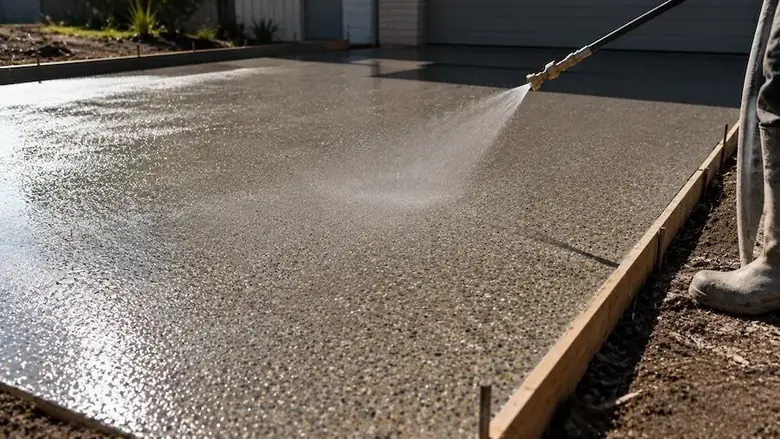
Curing is the process that allows concrete to continue gaining strength after it has been placed. Unlike paint or timber, concrete does not simply dry out. It requires sufficient moisture while the cement reacts with water to develop its full structural performance.
The objective is to create conditions that allow the concrete to cure evenly without losing moisture too quickly or being damaged by rain.
Weather Influences Every Stage of the Pour
Weather affects more than just curing. It also influences how easily concrete can be placed, finished and protected during the first few days after installation. Professional concreters consider several weather factors together before confirming a pour.
| Weather Factor | How It Affects Concrete |
|---|---|
| Temperature | Influences curing speed and finishing time. |
| Wind | Increases evaporation and the risk of surface cracking. |
| Rain | Can damage fresh concrete before it has hardened. |
| Humidity | Affects how quickly moisture leaves the slab. |
| Overnight Conditions | Influence early curing during the first 24 hours. |
Rather than relying on the season alone, experienced contractors assess all of these conditions before deciding whether it is suitable to pour. This practical approach produces better long-term results than simply waiting for a particular month of the year.
What Weather Conditions Are Ideal for Pouring Concrete?
The ideal conditions for concrete are neither too hot nor too wet. Mild temperatures, light winds and a favourable weather forecast allow concrete to cure gradually while giving contractors enough time to complete the finishing process properly.
Although no day is completely perfect, the following conditions generally produce the most consistent results for residential driveways across Perth.
| Condition | Why It Helps |
|---|---|
| Mild temperatures | Supports steady curing and reduces rapid moisture loss. |
| Light winds | Minimises surface drying and shrinkage cracking. |
| Dry forecast | Protects fresh concrete during the critical early curing period. |
| Stable weather | Allows consistent hydration and finishing. |
Choosing the best time of year to pour concrete ultimately comes down to selecting conditions that allow the slab to cure naturally without unnecessary stress from the weather.
How Each Season Affects Concrete in Perth
Each season offers different advantages and challenges for residential concrete work. Understanding these differences helps homeowners plan projects more confidently while recognising that experienced concreters can adapt throughout the year.
Rather than asking which season is always best, it is more useful to understand how each one affects curing and how contractors adjust their methods accordingly.
Summer
Summer is one of the busiest times for outdoor projects, but it also demands the greatest attention to curing. High temperatures and Perth’s dry easterly winds can cause moisture to leave fresh concrete much faster than intended, increasing the likelihood of plastic shrinkage cracking and reducing the time available to complete the surface finish.
Professional concreters commonly schedule early morning pours during summer to avoid the hottest part of the day. Extra attention is also given to curing so the slab retains enough moisture while it gains strength.
Although some homeowners believe summer should be avoided, it remains a suitable time to build when experienced contractors manage the weather correctly.
Autumn
Autumn is widely regarded as one of the easiest seasons for residential concrete projects in Perth. Temperatures are generally milder at 14 to 26°C, giving you clear skies without the heat of summer . These factors create an environment where concrete can cure steadily without excessive moisture loss.
The comfortable conditions also provide contractors with more time to properly place, finish and protect the concrete before it begins to harden. This consistency is one reason many homeowners consider autumn the best time of year to pour a concrete slab for driveways, crossovers and outdoor entertaining areas.
While autumn often provides excellent conditions, contractors should still monitor daily weather forecasts because unexpected rain can occasionally interrupt scheduled pours.
Winter
Perth winters are generally mild compared with many parts of Australia, so freezing temperatures are rarely a concern. Instead, rainfall becomes the main weather factor affecting concrete installations.
Heavy rain before fresh concrete has hardened can affect the surface finish and delay construction. For this reason, experienced concreters monitor forecasts carefully and will often postpone a pour if significant rainfall is expected.
When dry conditions are forecast, winter can actually provide favourable curing conditions because cooler temperatures reduce evaporation. Concrete is able to retain moisture more effectively, allowing hydration to continue at a controlled rate.
Spring
Spring offers many of the same advantages as autumn. Temperatures are generally comfortable, rainfall begins to decrease, and prolonged periods of extreme heat are still uncommon. These conditions allow concrete to cure consistently while giving contractors sufficient time to complete finishing work.
Spring is also a popular season for homeowners preparing their properties before summer. Combined with generally stable weather, it provides another excellent opportunity to complete a new driveway or concrete slab.
Like every season, however, the forecast should always be checked before work begins because weather conditions on the day remain the deciding factor.
Why Wind Is Often Overlooked
Temperature usually receives most of the attention when discussing concrete, but wind can have an equally significant impact. Strong, dry winds increase evaporation, causing moisture to leave the slab much faster than many homeowners realise.
Even on a relatively mild day, excessive wind can shorten the finishing window and increase the likelihood of plastic shrinkage cracking. This is particularly relevant in Perth, where dry easterly winds are common during the warmer months.
The best time of year to pour concrete is therefore influenced by more than temperature alone. Professional concreters assess wind forecasts alongside rainfall and daily temperatures before confirming whether conditions are suitable.
Why Rain Can Affect a Fresh Concrete Pour
Rain is one of the few weather events that can quickly change construction plans. Fresh concrete remains vulnerable until it has developed enough strength, and heavy rain during this period can damage both the appearance and quality of the finished surface.
If rain falls before the concrete has hardened sufficiently, it may wash cement paste from the surface, create uneven textures and interrupt finishing work. Rescheduling a project is often the better decision when significant rainfall is forecast.
Homeowners wondering when to pour concrete should understand that selecting a dry weather window is often more important than choosing a particular month of the year. A short delay can make a significant difference to the final result.
Why Proper Curing Is Essential
Pouring concrete is only part of the process. Proper curing begins immediately after finishing and plays a major role in determining how well the driveway performs over the years ahead.
As hydration continues, the concrete gradually gains strength. Allowing the slab to retain sufficient moisture during this period helps maximise durability while reducing the likelihood of cracking and premature surface wear.
Effective curing provides several important benefits:
- Improves long-term strength.
- Reduces shrinkage cracking.
- Creates a more durable surface.
- Helps the driveway age well.
- Extends the service life of the concrete.
Depending on the weather, contractors may use curing compounds, moisture-retention methods or protective coverings to help the slab cure correctly. There are many factors to consider before you can drive on your new concrete driveway . Good curing practices are just as important as selecting the right weather conditions for the pour itself.
How Experienced Perth Concreters Work Around the Weather
Experienced concreters understand that every day presents different conditions. Rather than following a fixed schedule, they plan each project around the weather forecast and adjust their methods to suit the conditions on site.
This approach helps minimise weather-related risks while giving the concrete the best opportunity to cure correctly. Careful planning before the pour is often what separates a long-lasting driveway from one that develops avoidable problems in the future.
Depending on the forecast, contractors may:
- Schedule early morning pours during hot weather.
- Delay work if heavy rain is expected.
- Monitor wind conditions before placing concrete.
- Adjust curing methods during periods of rapid evaporation.
- Protect freshly poured concrete until it has gained sufficient strength.
The best time of year to pour concrete is often the time when these conditions can be managed effectively. Experience allows contractors to adapt to Perth’s climate instead of relying on one particular season.
What Contractors Check Before Pouring Concrete
Before concrete is delivered to the site, several weather and site conditions should be assessed. Looking at these factors together helps determine whether conditions are suitable for a successful pour and whether any adjustments are required.
Professional planning reduces unnecessary risk and helps produce a stronger, more durable finished driveway.
| What Is Checked | Why It Matters |
|---|---|
| Maximum daytime temperature | Influences curing speed and finishing time. |
| Overnight temperatures | Affects early strength development. |
| Rain forecast | Helps avoid damage to fresh concrete. |
| Wind speed | Determines evaporation rate and cracking risk. |
| Humidity | Influences moisture retention during curing. |
| Site drainage | Prevents water from affecting the fresh slab. |
Checking these conditions allows contractors to choose the most suitable day and time for the project instead of simply following a construction schedule.
Frequently Asked Questions
Frequently Asked Questions
Autumn is often one of the most favourable seasons because temperatures are generally moderate and weather conditions are more predictable. These factors allow concrete to cure steadily while reducing the risk of rapid moisture loss. Although autumn offers many advantages, successful driveway installations can still be completed during other seasons when the weather is suitable.
Yes. Summer is a common time for concrete work throughout Perth, but contractors need to account for higher temperatures and dry winds. Early morning pours and proper curing methods help manage these conditions effectively.
Yes, provided heavy rain is not forecast. Perth winters are generally mild, making rainfall the primary weather consideration rather than cold temperatures.
Yes. Heavy rain before the concrete has hardened can affect the surface finish and overall appearance of the slab. This is why weather forecasts are carefully monitored before every pour.
Concrete continues gaining strength for many weeks after it is poured. While it may be suitable for light foot traffic after a short period, driveways generally require a longer curing period before vehicles should be driven on them. Your concreter will provide guidance based on the weather conditions and the requirements of your project.
Yes. Strong winds increase evaporation, causing moisture to leave the concrete more quickly. This can shorten finishing time and increase the likelihood of shrinkage cracking if the slab is not properly protected during curing.
Planning Your Concrete Driveway Project
The best time of year to pour concrete in Perth is generally autumn or spring because these seasons often provide milder temperatures and more predictable weather. Even so, there is no single perfect time of year. Successful concrete work depends on choosing suitable weather conditions and allowing the slab to cure properly after it has been poured.
Whether you’re planning a driveway, crossover or outdoor concrete slab, long-term performance comes down to proper preparation, weather assessment, quality workmanship and correct curing. These factors have a much greater influence on durability than simply choosing a particular month on the calendar.
If you’re looking for advice on when is the best time to pour concrete, Perth Concrete Driveways can help. We provide honest recommendations based on your site, concrete driveway services , along with fixed-price quotes and workmanship built for Perth conditions. Contact us for a no-obligation quote.
Covered in this guide
Perth Concrete Driveways
Perth's concrete driveway specialists. Free quotes across the metro area. Last updated 14 July 2026.