By the Perth Concrete Driveways team
Published 14 July 2026
AI Overview
Finding termites on concrete does not mean they are eating your driveway. Concrete contains no cellulose, so Australian subterranean termites cannot feed on it. What it usually means is that termites are travelling across or under the slab to reach timber elsewhere on the property, which is worth investigating.
Key highlights
- Termites cannot eat concrete, it contains no cellulose for them to feed on.
- Termites on a driveway are usually travelling, not feeding.
- Existing cracks and construction joints can become access points to hidden timber.
- Mud tubes are one of the clearest signs of active termite movement.
- A concrete driveway is not a substitute for a proper termite management system.
Summarise with AI
Finding termites on concrete can be worrying, but it does not mean the termites are eating your driveway. In Australia, subterranean termites feed on timber and other cellulose materials, not concrete. Their presence usually indicates they are travelling through existing cracks, joints or gaps on their way to a nearby food source. Understanding why termites appear on concrete can help you respond early and reduce the risk of expensive structural damage.
At Perth Concrete Driveways, we understand how concrete performs in Perth conditions and why proper construction, drainage and maintenance all contribute to a driveway that performs well over the long term. This guide explains what termites on concrete actually mean, how termites reach homes, what warning signs to look for and the practical steps homeowners can take to reduce risk.
Before You Take Action
- Termites on concrete usually mean termites are travelling rather than feeding.
- Australian subterranean termites cannot eat hardened concrete.
- Existing cracks, joints and service penetrations can become hidden access points.
- Moisture around a driveway can increase the likelihood of termite activity.
- Most driveway cracks are normal and do not automatically indicate termites.
- Professional inspections can detect termite activity before major timber damage develops.
Can Termites Eat Concrete?
One of the most common questions homeowners ask is can termites eat concrete. The answer is no. Concrete contains no cellulose, which is the material termites need to survive, so it provides no food source for a colony.
This misunderstanding often comes from homes built on concrete slabs that later develop termite damage. Although the damage is discovered inside a building surrounded by concrete, the termites have not chewed through the slab. Instead, they have located existing openings that allow them to move between the soil and nearby timber.
Understanding this difference helps homeowners focus on the real issue. The concern is rarely the concrete itself but whether termites have found concealed access to timber around or beneath the home.
What Does It Mean if You See Termites on a Concrete Driveway?
Seeing termites on concrete is usually an early warning that termite activity may be occurring somewhere on the property. With over 300 termite species in Australia , and 20 of them eat through solid wood, there is a need to always keep a lookout for potential colonies. Subterranean termites live underground and continually search for timber, so spotting them on or around a driveway often indicates they are moving between the soil and a nearby food source.
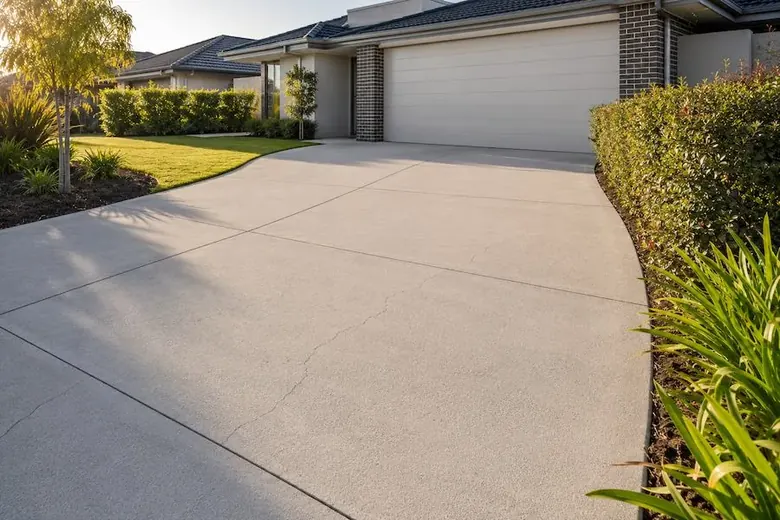
Many Perth homes have timber fencing, pergolas, retaining walls, decking or structural framing close to concrete driveways. These are the areas that deserve the greatest attention because they provide the cellulose termites need to survive.
You may also notice termite trails on concrete, particularly near slab edges, garden beds or external walls. These mud tubes help termites travel safely while retaining moisture and often point towards areas that should be inspected more closely.
Why You Might Suddenly Notice Termites
Many homeowners wonder why termites seem to appear without warning. In reality, a colony may have been active for months or even years before becoming visible.
Activity often becomes more noticeable after rainfall, during warmer weather or when landscaping disturbs the soil around the property. Colonies also expand over time, increasing the number of worker termites searching for new food sources. These changes can make termite activity more obvious even though the colony has been established for quite some time.
If you repeatedly notice termites on concrete, it is worth arranging a professional inspection rather than waiting for signs of damage to appear inside the home.
How Do Termites Get Through Concrete?
Termites cannot chew through hardened concrete, but they are extremely effective at locating existing openings. Even very small gaps can provide enough space for workers to move between the soil and concealed timber.
Understanding where these openings occur helps explain why homeowners occasionally discover termites on concrete, even around relatively modern homes.
Natural Cracks
Concrete naturally changes over time. As it cures, responds to seasonal temperatures and experiences minor ground movement, small cracks may develop. Most are cosmetic and are considered a normal part of concrete performance.
Although these cracks rarely affect the strength of the driveway, they should still be monitored. Wider cracks or cracks that continue growing may warrant further investigation, particularly if they are located beside the house or adjacent to timber structures.
Joints and Construction Gaps
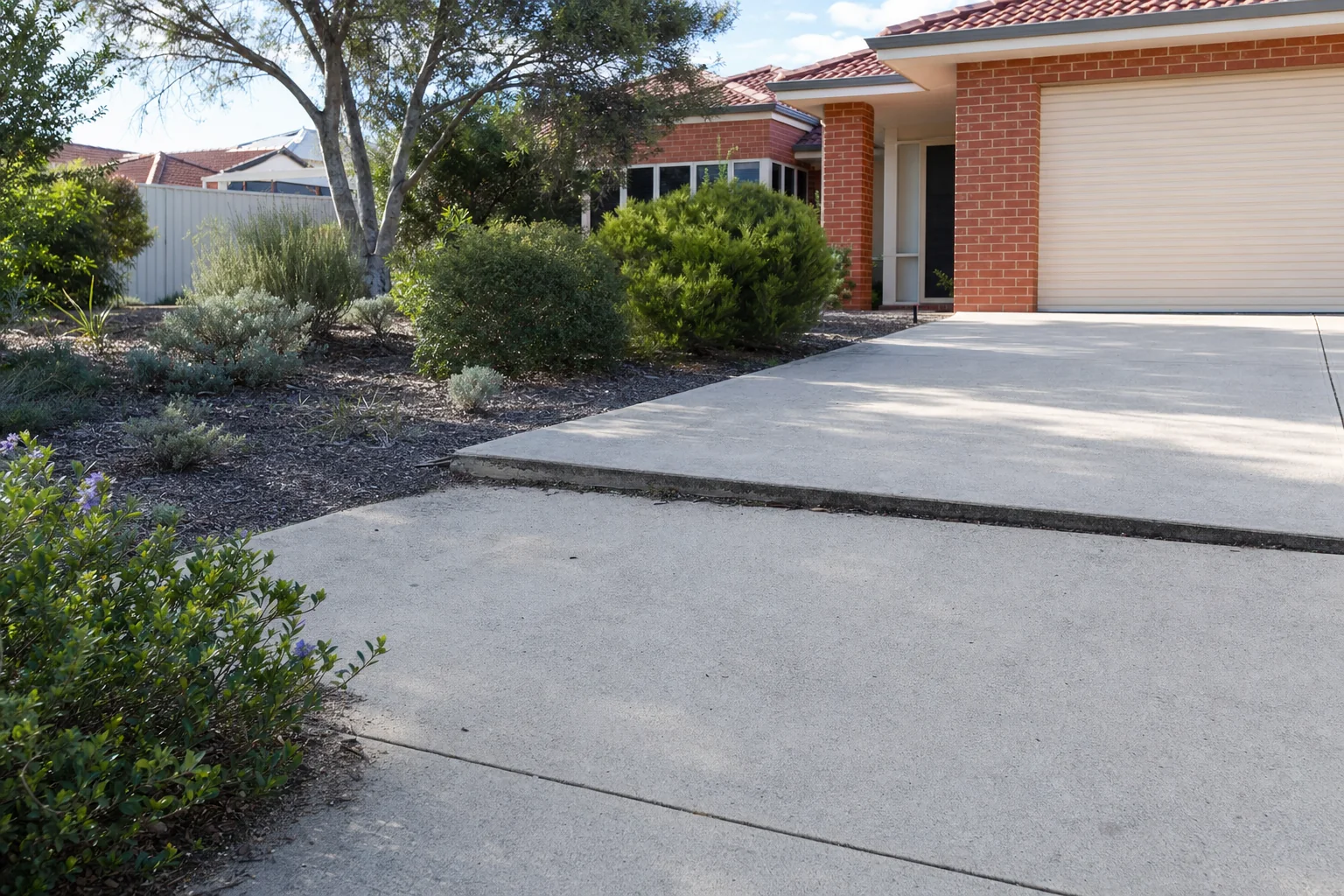
Control joints and expansion joints are intentionally included in concrete driveways to help manage natural movement and reduce uncontrolled cracking. They are an essential part of quality concrete construction rather than a defect.
Over time, small gaps may develop around these joints or where services pass through the slab. These openings are one reason concrete slab termite protection is considered as part of a broader termite management strategy rather than relying on the concrete slab alone.
| Concrete Feature | Can Termites Damage It? | Can It Become an Access Point? |
|---|---|---|
| Solid concrete | No | Very unlikely |
| Natural cracks | No | Yes, if connected to soil |
| Control joints | No | Potentially, if gaps develop |
| Service penetrations | No | Yes, if not properly sealed |
Why Modern Homes Still Need Termite Protection
Many homeowners assume that a concrete slab or driveway is enough to keep termites away. While concrete is an important part of modern construction, termite management involves much more than the slab itself. Homes are built with plumbing penetrations, expansion joints, landscaping, retaining walls and other features that require careful detailing to reduce the risk of concealed termite entry.
For this reason, termite protection is usually approached as a complete system rather than relying on one building material. Depending on the property, this may include physical barriers, chemical treatments, regular inspections and good maintenance practices .
How Termite Barriers Help
A properly designed termite barrier concrete slab system helps reduce the likelihood of termites entering concealed areas of the home. Physical barriers are installed during construction to make termite movement more difficult, while chemical barriers create treated zones in the soil around the building.
No termite barrier should be viewed as permanent or maintenance free. Landscaping changes, renovations, plumbing work and natural ground movement can all affect how well a barrier performs over time. Regular inspections remain an important part of protecting any property.
Why New Homes Can Still Experience Termite Activity
Many people assume termites are only a problem for older houses, but even newly built homes can experience termite activity. Colonies already living in the surrounding soil continue searching for timber regardless of the age of the building.
Construction methods have improved significantly, but no home is completely immune. Poor drainage , untreated landscaping timber, leaking plumbing, damaged barriers or changes made after construction can all increase termite risk if they are not properly managed.
How Australian Subterranean Termites Travel
Understanding how termites move helps explain why they are often discovered around driveways, slabs and paved areas. Australian subterranean termites live underground and rely on moisture to survive, so they avoid prolonged exposure to open air whenever possible.
Instead of travelling across exposed ground, they usually build protected routes between the colony and nearby food sources. This allows thousands of worker termites to move safely while maintaining the humid conditions they need.
Why Moisture Matters
Moist soil creates favourable conditions for subterranean termites. When the ground remains damp for extended periods, colonies can travel more efficiently and are more likely to remain active close to buildings.
Leaking plumbing, overflowing gutters, blocked drains, irrigation systems and poor surface drainage can all contribute to persistent moisture around a property. While these issues do not cause termites, they can make the surrounding environment more suitable for them.
Mud Tubes Explained
One of the clearest signs of termites in concrete areas is the appearance of mud tubes. These narrow tunnels are built using soil, moisture and termite saliva, allowing termites to travel while remaining protected from predators and dry conditions.
Mud tubes are commonly found beside driveway edges, retaining walls, foundations, brickwork and garden beds. Their presence does not confirm structural damage, but it does indicate active termite movement that should be investigated.
You may occasionally notice a single termite in concrete joints or surface cracks. Although one termite does not always indicate a major infestation, it should never be dismissed without checking the surrounding property for additional signs of activity.
What Around Your Driveway Is Actually at Risk?
When termites are active around a driveway, the greatest risk usually lies with nearby timber rather than the concrete itself. Some timber structures are exposed and easy to inspect, while others remain hidden inside walls or beneath flooring until damage becomes significant.
Knowing which areas deserve regular attention helps homeowners detect problems much earlier and reduce the likelihood of expensive repairs.
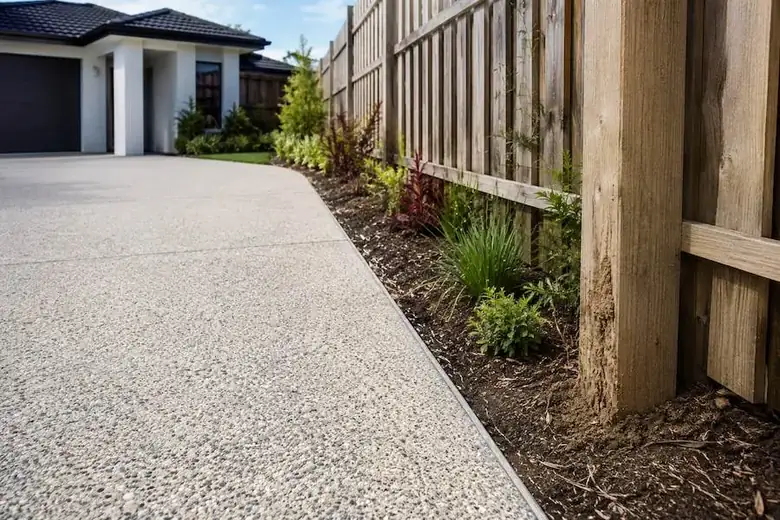
| Area Around the Driveway | Risk Level | Reason |
|---|---|---|
| Timber fence posts | High | Often in direct contact with soil |
| Pergolas and decking | High | Provide a readily available food source |
| Garage and house framing | High | Structural timber is often concealed |
| Garden edging made from timber | Moderate to high | Frequently exposed to moisture |
| Concrete driveway | Very low | Not susceptible to termite damage |
Landscaping Can Increase Termite Risk
Changes made after a home is built can sometimes create conditions that favour termite activity. Garden beds built against walls, untreated timber sleepers, stacked firewood, heavy mulch and dense vegetation can all make inspections more difficult while retaining moisture close to the building.
Keeping inspection zones visible, maintaining adequate clearance around walls and avoiding unnecessary timber-to-soil contact all support long-term termite management.
Where termite activity has already been confirmed, a pest professional may recommend installing termite bait stations in concrete surrounds or nearby garden areas. These systems are designed to monitor and manage termite colonies as part of an integrated treatment program.
Can Moisture Around a Driveway Attract Termites?
Moisture is one of the biggest factors influencing subterranean termite activity around Australian homes. While water does not attract termites by itself, damp conditions help colonies survive and expand more easily beneath the surface.
Good drainage benefits both your driveway and your home. It helps protect the concrete from unnecessary water exposure while also reducing one of the environmental conditions that termites favour.
Common sources of excess moisture include poor surface drainage, leaking plumbing, overflowing downpipes, irrigation systems positioned beside the driveway and garden beds that remain wet for long periods. Addressing these issues supports better long-term property maintenance regardless of whether termites are currently present.
Areas That Deserve Extra Attention
Bathrooms, laundries and kitchens often contain plumbing that runs beneath or alongside the slab. Even a slow leak can keep the surrounding soil damp if it goes unnoticed.
Driveway edges beside retaining walls, irrigation systems and garden beds should also be checked periodically. Looking after these areas will not eliminate termite risk altogether, but it can reduce the conditions that allow termite colonies to remain active close to the home.
Does Every Crack Mean You Have Termites?
No. Driveway cracks , specifically small ones, naturally develop in many concrete driveways over time. Even a professionally constructed driveway can experience minor shrinkage and movement as the concrete cures and responds to Perth’s changing weather conditions.
Most hairline cracks are cosmetic and do not indicate termite activity. The key is to monitor how cracks change over time and whether they are accompanied by other warning signs such as mud tubes, live termites or damage to nearby timber.
Normal Concrete Movement
Concrete naturally expands and contracts with temperature changes, while slight ground movement can also influence its appearance over the years. Control joints are deliberately installed to help accommodate this movement and reduce the likelihood of larger uncontrolled cracks.
Fine surface cracks are generally considered part of normal concrete performance and are not usually a cause for concern on their own.
When a Crack Deserves More Attention
Although most cracks are harmless, some should be inspected more closely. Cracks that continue widening, show signs of movement or develop beside walls, service penetrations or timber structures may require further assessment.
Homeowners sometimes become concerned after finding what appear to be termite holes in concrete. In most cases, these are simply existing imperfections rather than holes created by termites. If you also notice mud tubes, live termites or timber damage nearby, arranging a professional termite inspection is the safest next step.
When to Call a Concreter or a Pest Inspector
Not every issue requires the same professional. Understanding who to call can save time and ensure the problem is properly addressed.
- Contact a concreter if cracks are widening, sections of the driveway are moving or drainage problems are developing.
- Contact a licensed pest inspector if you discover live termites, mud tubes, damaged timber or repeated termite activity around the property.
- If both structural movement and termite activity are present, arranging both inspections may be appropriate.
Signs of Termite Activity Around a Concrete Driveway
Recognising termite activity early gives homeowners the best opportunity to limit damage and organise treatment before a colony becomes well established. Many of the earliest warning signs appear outside the home before internal damage becomes obvious.
Visible Warning Signs
One of the clearest indicators is the appearance of termite trails on concrete. These mud tubes allow termites to travel safely between the soil and nearby timber while retaining the moisture they need to survive.
You may also notice live termites near slab edges, mud tubes climbing brickwork or retaining walls, discarded wings after a termite swarm or small soil deposits forming around cracks and joints. Even spotting a single termite in concrete joints should encourage a closer inspection of the surrounding property.
Signs Inside the Home
Sometimes the first indication of a termite problem appears indoors. Hollow-sounding timber, damaged skirting boards, bubbling paint over timber surfaces, sagging door frames or doors and windows that suddenly become difficult to close can all suggest concealed termite damage.
If these warning signs appear after you have already noticed termites on concrete, it is advisable to arrange a professional inspection as soon as practical.
What Should You Do if You Find Termites on Your Driveway?
Finding termites can be unsettling, but reacting too quickly can sometimes make treatment more difficult. Spraying household insecticides or breaking apart mud tubes may disturb the colony and cause termites to relocate without eliminating the infestation.
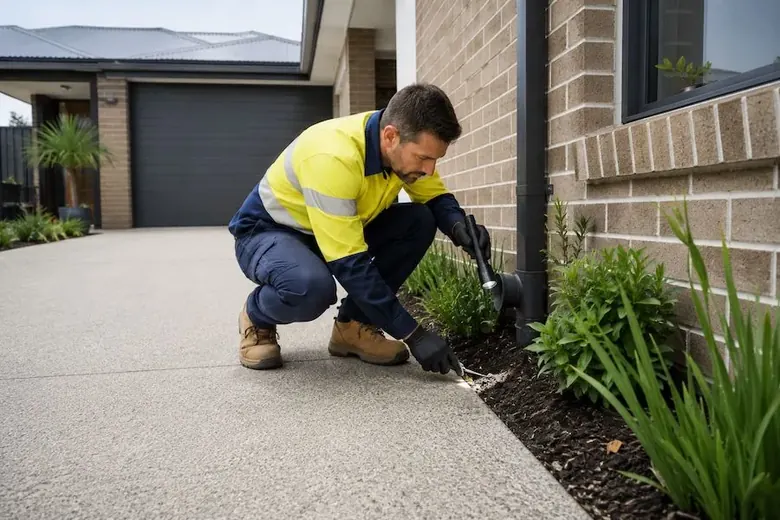
A more effective approach is to document what you have found and allow a licensed termite specialist to determine the extent of the activity before treatment begins. A qualified pest professional can determine whether termites are active, identify likely entry points and recommend the most suitable treatment. Depending on the situation, they may recommend monitoring systems, targeted treatments or termite bait stations in concrete surrounds where termite movement has been confirmed.
- Leave mud tubes and visible termite activity undisturbed.
- Take clear photographs of termites and the surrounding area.
- Inspect nearby timber structures for obvious signs of damage.
- Look for drainage issues, plumbing leaks or persistent moisture around the driveway.
- Arrange a professional termite inspection if termites or mud tubes are present.
Frequently Asked Questions
Frequently Asked Questions
No. If you are asking can termites eat concrete, the answer is no. Australian subterranean termites cannot chew through hardened concrete because it contains no cellulose, which is the material they feed on. Instead, they use existing cracks, joints and other openings to reach nearby timber.
Finding termites on concrete usually means the insects are travelling between their underground colony and a timber food source. The driveway may simply form part of their route, so it is worth checking nearby timber structures for signs of activity.
Yes. Although termites cannot create their own openings in concrete, they can move through existing cracks if those cracks connect the soil with concealed timber. This is why routine inspections remain worthwhile, even when a driveway appears to be in good condition.
A concrete driveway provides a durable surface around the home, but it should not be relied on as the only form of concrete slab termite protection. Long-term protection generally involves regular inspections, good drainage and an appropriate termite management system recommended by a licensed pest professional.
Yes. Mud tubes are one of the clearest signs of termites in concrete areas because they indicate termites are actively moving between the soil and a food source. While they do not confirm structural damage, they should always be investigated promptly.
Arrange a professional inspection if you notice repeated termite activity, mud tubes, damaged timber, hollow sounding wood, discarded wings or persistent termite trails on concrete. Acting early gives you the best chance of identifying problems before significant repairs become necessary.
Protecting Your Home Starts With Early Intervention
Finding termites on concrete does not automatically mean your driveway has a problem, but it should prompt a closer look at the rest of your property. Early termite activity is often far easier and less expensive to manage than widespread structural damage that has gone unnoticed for months or years.
Regular termite inspections, good drainage, prompt repairs to plumbing leaks and maintaining your driveway all contribute to better long-term property protection. Keeping cracks, joints and surrounding landscaping in good condition also makes routine inspections easier and helps identify potential issues before they become more serious.
Covered in this guide
Perth Concrete Driveways
Perth's concrete driveway specialists. Free quotes across the metro area. Last updated 14 July 2026.