
By the Perth Concrete Driveways team
Published 18 June 2026
AI Overview
A new concrete driveway is usually safe to walk on after 24 to 48 hours, ready for cars after about 7 days, and fully cured at around 28 days. Rushing onto fresh concrete is a common cause of early damage. Proper curing in the first weeks is what lets the slab reach its full strength.
Key highlights
- Safe to walk on after roughly 24 to 48 hours
- Keep vehicles off for at least 7 days
- Concrete keeps gaining strength for about 28 days
- Avoid heavy loads and trailers in the first few weeks
- Proper curing prevents early cracking
- Perth heat means curing needs extra care
Summarise with AI
A new concrete driveway should generally be left for around 7 days before a standard passenger vehicle is driven on it. If heavier vehicles such as caravans, motorhomes, trucks or skip bins will be using the driveway, waiting approximately 28 days is usually recommended.
Many homeowners ask how long before you can drive on new concrete because the surface often looks dry and finished much sooner. The reality is that concrete continues developing strength after it hardens. Giving a new concrete driveway the time it needs to cure properly helps reduce the risk of cracking, surface damage and premature wear.
What You Need to Know
- Most passenger vehicles can use a new concrete driveway after approximately 7 days.
- Light foot traffic is usually acceptable after 24 to 48 hours.
- Heavy vehicles should generally stay off a new concrete driveway for around 28 days.
- Concrete may look dry before it has developed enough strength for vehicle traffic.
- Perth’s hot weather can speed up drying but does not eliminate the need for proper curing.
- Driving on concrete too early can lead to cracking, tyre marks and edge damage.
- Proper installation and curing both contribute to long-term durability.
How Long Before You Can Drive on a New Concrete Driveway?
The simple answer is that most homeowners should wait about 7 days before driving on a new concrete driveway with a standard passenger vehicle.
This recommendation allows the concrete to develop enough strength to handle normal vehicle loads without increasing the risk of damage. While every project is different, seven days is a widely accepted timeframe for residential driveways throughout Australia.
Light foot traffic can usually be allowed after 24 to 48 hours. This allows homeowners to access their property while still protecting the surface during the most critical part of the curing process.
Heavier loads require more patience. For example, most standard-sized caravans in Australia weigh approximately 2,000kgs to 3,000kgs, which can place significantly more stress on a slab than a family car. For these loads, waiting approximately 28 days is generally considered best practice.
One reason there is so much confusion around how long before you can drive on new concrete driveway surfaces is that concrete often looks ready well before it has reached adequate strength. The surface may appear fully cured, but important changes are still happening within the slab.
Understanding what occurs during curing helps explain why waiting matters.

Why Can’t You Drive on Concrete Immediately?
A common misconception is that once concrete looks dry, it is ready to use.
In reality, concrete hardens and cures at different rates. Hardening is what you see on the surface. Curing is the ongoing process that allows the concrete to gain strength internally.
A new concrete driveway may feel firm underfoot after a day or two, but it is still developing the strength needed to support vehicle traffic. This process takes time.
When people ask how long before you can drive on new concrete, they are really asking how long it takes for the concrete to become strong enough to carry weight safely. The answer depends on curing, not appearance.
Modern construction projects often involve fresh concrete testing to confirm that concrete meets performance requirements. While residential homeowners may not see formal fresh concrete testing results on a driveway project, the principle remains the same. Concrete strength develops progressively and cannot be rushed simply because the surface appears dry.
This is particularly important in Perth, where hot weather can cause the surface to dry quickly. Fast drying does not mean a new concrete driveway has finished curing.
What Happens During the First 28 Days of Concrete Curing?
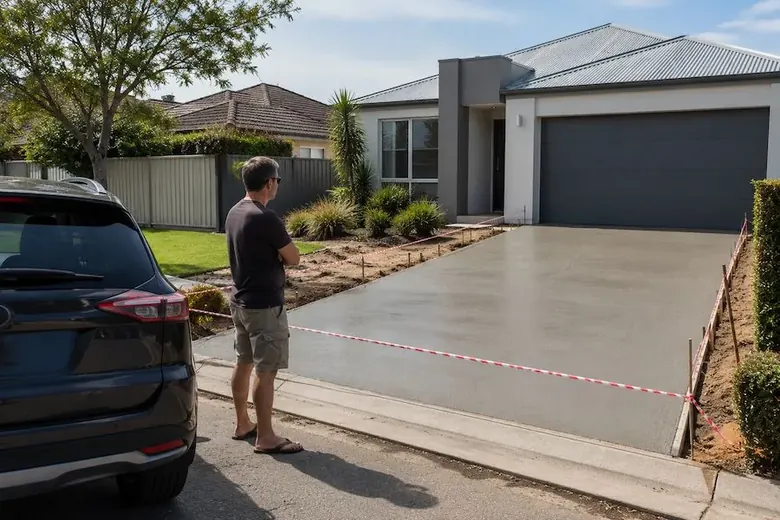
The first month is the most important period in the life of a new concrete driveway. During this time, the concrete develops the strength it needs to handle vehicle traffic and everyday use.
The First 24 Hours
The first day is when concrete is most vulnerable.
During this period, all traffic should be avoided. Footprints, surface marks and damage to decorative finishes can occur if the concrete is disturbed too early.
Days 2 to 7
Between the second and seventh day, strength develops rapidly.
Light foot traffic is generally acceptable during this stage, but vehicle traffic should still be avoided. The slab may appear finished, yet the curing process remains ongoing.
Many homeowners become tempted to use the driveway during this period because it looks ready. Waiting a few extra days is often the difference between protecting the driveway and creating avoidable damage.
Days 7 to 28
After around seven days, a new concrete driveway will typically have developed sufficient strength for normal passenger vehicles.
However, curing continues. The concrete keeps gaining strength throughout the following weeks, which is why heavy vehicles should generally wait until around 28 days before using the driveway.
The goal is not simply to create a driveway that looks good after installation. The goal is to create a driveway that performs well for years.
Concrete Driveway Curing Timeline
The table below provides a practical guide for residential concrete driveways.
| Time After Pour | Recommended Use |
|---|---|
| 0 to 24 Hours | No traffic |
| 24 to 48 Hours | Light foot traffic |
| Around 7 Days | Passenger vehicles |
| Around 28 Days | Heavy vehicles and a full curing period |
These timeframes are general guidelines. Your concreter’s advice should always take priority because site conditions, weather and slab design can influence curing recommendations.
What Factors Affect How Long Concrete Takes to Cure?
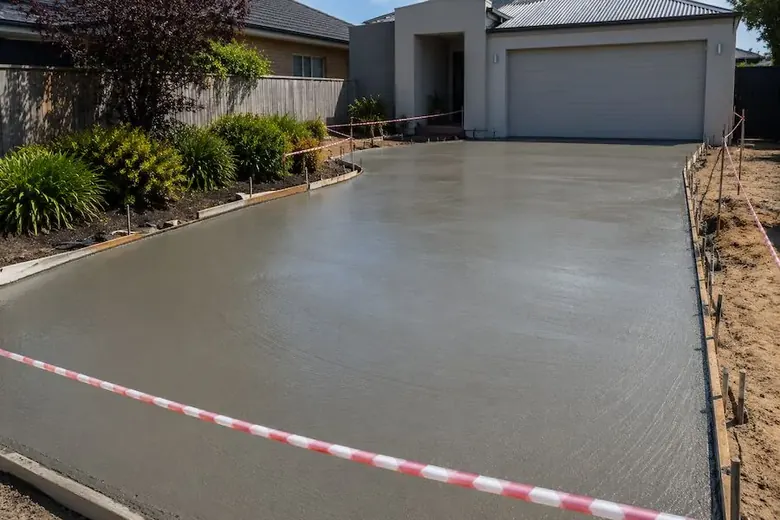
Not every new concrete driveway cures at exactly the same rate. Several factors influence strength development and the timeframe before vehicle access is recommended.
Perth Weather Conditions
Perth’s climate plays a major role in the curing process.
Hot temperatures can increase moisture loss from the surface, making concrete appear ready sooner than it actually is. This often leads homeowners to underestimate how long before you can drive on new concrete.
Cooler weather generally slows strength development, which may extend curing time. Regardless of the season, proper curing remains essential.
Concrete Mix Design
Different concrete mixes develop strength at different rates.
Some are designed to achieve early strength more quickly, while others focus on long-term durability and performance. The mix selected for the project can influence when traffic is allowed.
Site Preparation and Reinforcement
The concrete itself is only part of the system.
Ground preparation, compaction, drainage and reinforcement all contribute to the performance of a new concrete driveway. Poor preparation beneath the slab can lead to movement and cracking, regardless of how well the concrete cures.
Driveway Design
The intended use of the driveway also matters.
A driveway that will only carry passenger vehicles may have different requirements than one expected to support caravans, trailers or heavier commercial vehicles.
| Factor | Impact on Curing and Performance |
|---|---|
| Weather Conditions | Affects moisture loss and strength development |
| Concrete Mix | Influences early and long-term strength |
| Site Preparation | Supports slab stability and durability |
| Reinforcement | Helps manage loads and movement |
| Driveway Thickness | Affects load capacity and performance |
What Happens if You Drive on Concrete Too Soon?
The risks associated with early access range from cosmetic issues to long-term structural concerns. A new concrete driveway represents a significant investment, so it makes sense to protect it during the curing period.
Surface Damage
Tyre marks are among the most common problems caused by driving on concrete too early.
Decorative finishes such as exposed aggregate and coloured concrete can also be damaged before they have fully hardened. In some cases, these marks become permanent.
Cracking
Concrete naturally experiences internal stresses as it cures.
Adding vehicle loads before sufficient strength develops can increase the risk of cracking. While not every driveway will crack immediately, premature loading can contribute to long-term durability problems.
Edge Damage
Driveway edges are often the most vulnerable part of the slab.
Driving too close to the edge or placing heavy loads near unsupported sections can lead to chipping and cracking. This is particularly common when a new driveway is used before curing has been completed.
How to Protect Your New Concrete Driveway During Curing
Protecting a new concrete driveway during curing does not require complicated maintenance. A few sensible precautions can make a significant difference.
Follow the recommendations provided by your concreter, as every project is slightly different.
- Avoid placing heavy loads on the driveway during the first month whenever possible.
- Keep caravans, motorhomes, skip bins and commercial vehicles off the slab until curing is complete.
- Be mindful of driveway edges during the early weeks.
- Keep the surface reasonably clean and avoid activities that could damage the concrete while curing continues.
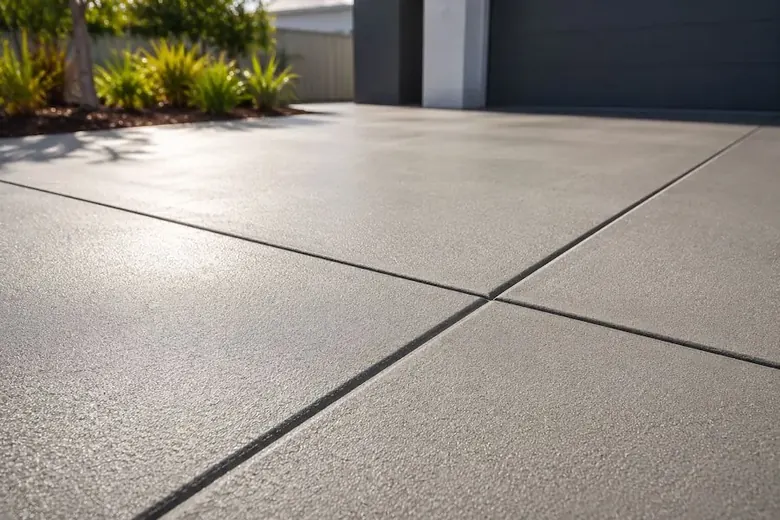
Why Proper Installation Matters Just as Much as Curing
Curing is important, but it is only one part of creating a durable driveway.
A new concrete driveway relies on proper preparation, reinforcement, drainage and workmanship from the beginning. Even perfectly cured concrete can experience problems if the installation was not completed correctly.
Proper site preparation creates a stable base that helps support the slab throughout its lifespan. Reinforcement and appropriate slab thickness help the driveway handle vehicle loads and normal ground movement.
Perth conditions can be demanding on concrete surfaces. Hot summers, UV exposure and shifting soils all place stress on driveways over time. A well-built new concrete driveway accounts for these factors from the outset.
When proper installation is combined with adequate curing, homeowners are far more likely to achieve the long-term value they expect from their investment.
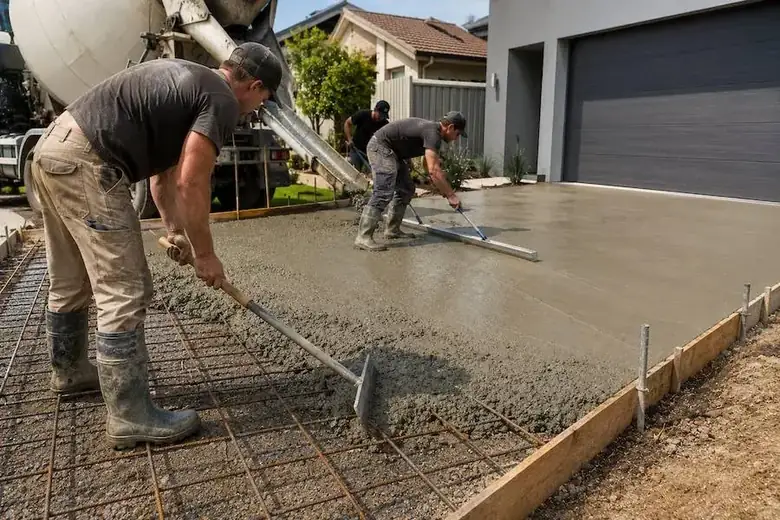
Frequently Asked Questions
Some specialised concrete mixes gain strength more quickly, but for most residential driveways, waiting around seven days remains the safest approach. Always follow the advice provided by your concreter.
No. Hot weather may speed up surface drying, but it does not eliminate the need for curing.
The outcome depends on the age of the concrete, vehicle weight and site conditions. Some driveways may show no visible damage, while others can develop tyre marks, surface defects or cracking.
As a general guide, heavier loads should wait approximately 28 days before being placed on a new concrete driveway.
The curing process is largely the same. However, damage is often more noticeable on decorative finishes, making it even more important to follow the recommended waiting period.
New Concrete Driveway Built to Last
For most Australian homes, a new concrete driveway should be left for around 7 days before passenger vehicles use it and approximately 28 days before heavier loads are introduced. While the surface may look ready sooner, curing continues well beyond the first few days.
Understanding how long before you can drive on new concrete driveway surfaces helps avoid preventable problems such as cracking, tyre marks and edge damage. Allowing adequate curing time is one of the simplest ways to protect the lifespan of your driveway.
If you’re planning a new driveway or need advice on a new concrete driveway, Perth Concrete Driveways can help with professional quality services and solutions built for Perth conditions.
Covered in this guide
Perth Concrete Driveways
Perth's concrete driveway specialists. Free quotes across the metro area. Last updated 18 June 2026.